Clayton builds a foundation for quality with Tricentis Tosca and qTest
Clayton used Tricentis Tosca and qTest to modernize quality assurance...
Keep pace with AI-driven development using an agentic approach to modern test management.

Every AI headline this year is about speed: code shipping faster, test scripts generating in seconds, releases compressing from weeks to days. What gets less attention is what happens to quality when everything around it accelerates and the way you manage testing doesn’t.
The gap where most enterprises find themselves in right now spans from development moved to AI-assisted workflows all the way to multiplied testing tool portfolios. But test management, the layer that’s supposed to tell you whether any of it is actually ready to ship, is still stitched together the old way: one team’s Jira, another’s Selenium grid, a third team’s Postman collection, all reporting into different places, none of it adding up to a single answer on release readiness.
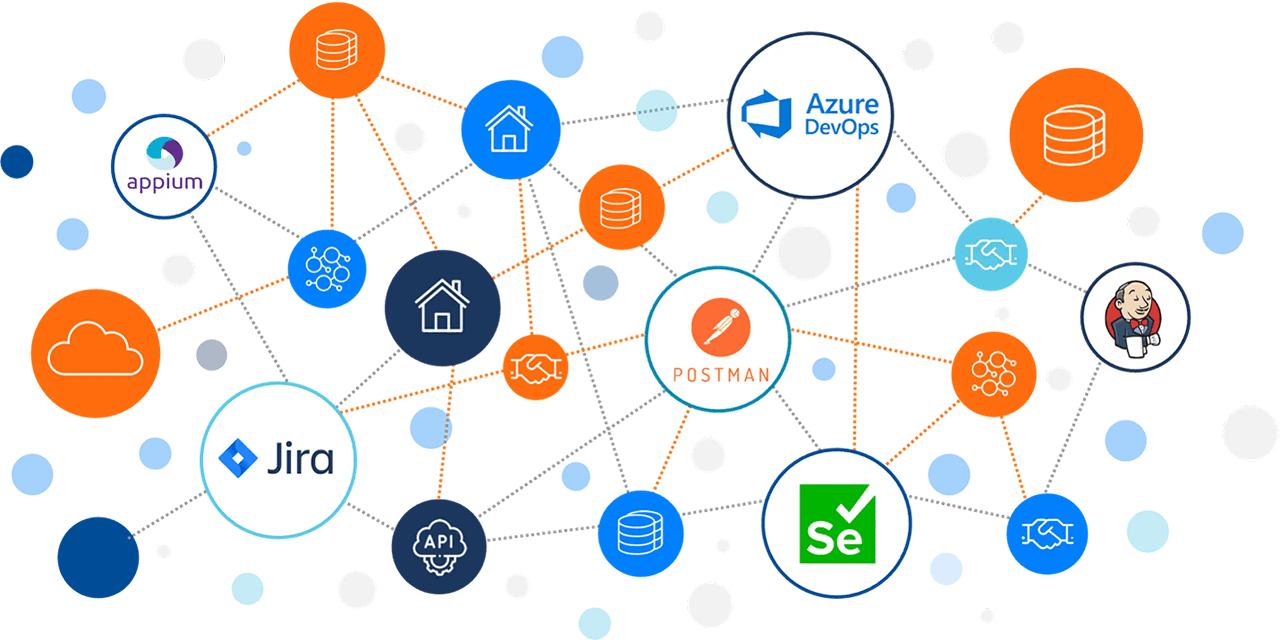
Every team picks its own stack. One uses Java and GitHub Copilot, another uses Python and ChatGPT, a third builds with Cursor and its own pipeline. That was manageable when change moved at a human pace, but AI-accelerated delivery removed that constraint. Requirements, code, and tests now shift week to week, sometimes day to day, depending on urgency and breadth of test, and each team’s fragment of the testing picture goes stale just as fast.
This drives toward an end result with implications deeper than mere inconvenience: it’s also a visibility problem. At the exact moment visibility matters most, leaders can’t answer basic questions with confidence: What’s our real test coverage? What’s the risk in this release? Are we introducing more defects because AI touched more of the code? When testing, quality intelligence, and performance data live in separate silos, “release readiness” becomes a guess dressed up as a status update.
The instinct, when quality can’t keep up, is to add people or add process. Neither actually closes the gap. Manual testing paired with isolated automation tools means quality decisions still happen late, still depend on someone manually reconciling five dashboards, still can’t be produced fast enough to match how quickly the underlying application changed. AI didn’t remove this bottleneck, but rather raised the cost of ignoring it.
The organizations getting ahead of this aren’t buying more point solutions. They’re consolidating around a test management platform that acts as the connective layer, not just a system of record, but the place where test creation, execution, performance, and quality signals actually talk to each other.
Here’s where Tricentis qTest factors into the equation, not as a replacement for the tools your teams already use, but as the layer that makes them work together.
Start with test creation. qTest’s Agentic Test Creation turns requirements into context-aware test cases in seconds, pulling from existing test assets, requirement fields, and quality metrics already in qTest so agents aren’t generating duplicate work. Every generated test case runs through a human-in-the-loop review step before anything gets committed, so speed doesn’t come at the cost of oversight.
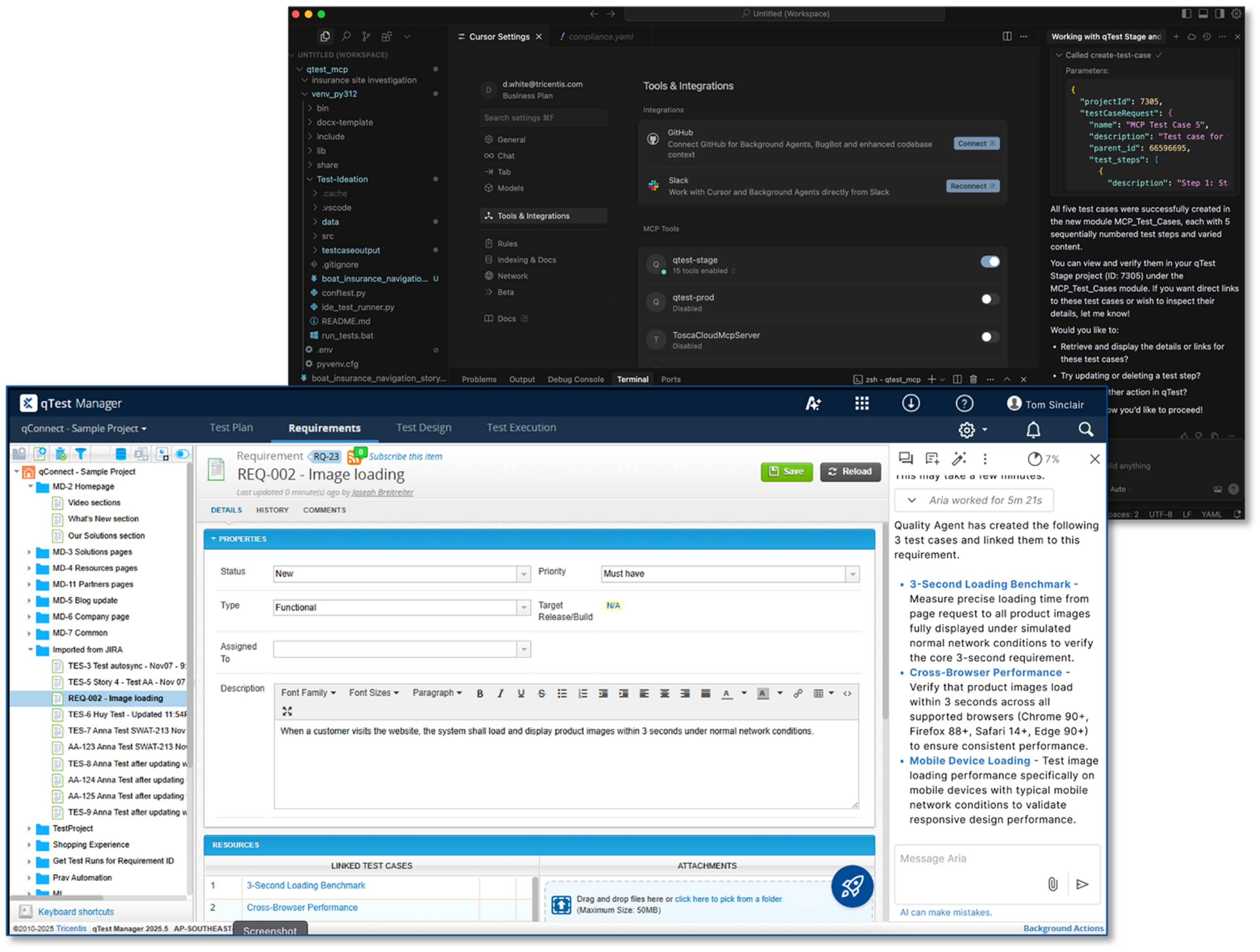
From there, qTest connects out instead of standing alone:
None of these integrations are agents replacing your engineers. They’re agents doing the coordination work that used to fall on people: converting, executing, reporting, and surfacing risk, so your team can spend its time on judgment calls instead of status-chasing.
A platform approach consolidates tools more than just for its own sake. It gives an organization something that a pile of point solutions can’t: one place to assess release readiness, test coverage, and risk level, updated as fast as your teams actually work. Tricentis’ methodology already covers over 190 technologies across custom applications, packaged systems like SAP and Salesforce, and data infrastructure, so the connective layer doesn’t ask you to rip out what’s already working. It asks you to stop managing quality in fragments.
In this agentic future, the teams that will keep pace aren’t the ones testing fastest. They’re the ones who can see, in one place, whether what they shipped is actually ready.
Learn more about how to scale, orchestrate, and accelerate test automation for complete visibility into your testing process.
Learn more about how to scale, orchestrate, and accelerate test automation for complete visibility into your testing process.