
Skip to content

RPA or MBT? Choosing the right automated testing approach for government

RPA and model-based methods both automate testing, but they were built for very different jobs, and choosing wrong adds risk to high-stakes public sector work. Five things to weigh before you decide.

Sep. 04, 2026
Author: Tricentis Staff

Key takeaways

  • RPA and model-based testing (MBT) solve different problems — picking the wrong one adds risk and inefficiency to public sector testing.
  • For most agencies, MBT is the stronger choice, since it scales with change and complexity, while RPA works best for simple, rules-based tasks.

Software runs mission delivery in the public sector. As agencies modernize and systems grow more connected, the cost of a failed release climbs. The result can be service disruptions, compliance gaps, and loss of public trust.

Automated testing is central to managing that risk, but it raises a practical question: which approach is right?

Two options come up often: robotic process automation (RPA) and model-based testing (MBT). Both support automation, but they were built for very different purposes. Choosing the wrong one can add risk and inefficiency to the high-stakes work of public sector software testing. Here are five things to weigh as you decide, especially as agentic AI reshapes the testing landscape.

  1. Understand what each approach is designed to do. RPA is well suited to simple, rules-based processes. These can include form submissions, batch updates, and other repetitive workflows. It can confirm that a process runs as expected. MBT, by contrast, is built for enterprise-scale quality assurance. It is designed to handle the scale, complexity, and constant change that large-scale government environments demand.
  2. Consider how each holds up to change. RPA relies on scripts tied to the user interface. When an application changes, those scripts can break, creating more maintenance work, especially with cloud platforms that update frequently. MBT uses models that reflect how systems actually work. When an application is updated, teams update the model and the tests adjust with it, meaning less rework for stretched public sector teams and fewer broken tests.
  3. Look at coverage across the enterprise, not just the happy path. RPA often focuses on expected workflows. It struggles with edge cases and interactions across systems. MBT helps teams test complete business processes across ERP platforms like SAP or Oracle, as well as APIs, databases, and user interfaces. This can help teams find issues earlier, when they are easier and less costly to fix.
  4. Weigh scalability and maintenance. RPA struggles to scale. Because its scripts are brittle and tied to the user interface, bots multiply and maintenance costs mount as environments grow. MBT uses reusable, model-driven tests, enabling teams to expand coverage without constantly rebuilding tests.
  5. Ask whether the approach is built for AI and compliance. Model-based testing goes beyond automation to make testing more intelligent. Teams can prioritize tests based on risk, use change impact analysis to identify what needs testing, and generate realistic, masked test data. Tests are also repeatable and traceable, which can help agencies produce the audit-ready records they need.

The forces reshaping government systems, including complexity, integration, and constant change, are the same forces redefining what testing must do. For most agencies, that makes MBT the strategic choice, with RPA best reserved for validating simple workflows in production. A hybrid approach can pair the two, automating repetitive functional paths while exploratory testing surfaces edge cases and UX issues that models might miss.

Tricentis provides a testing platform purpose-built for both enterprise and public sector environments, combining model-based testing with agentic AI-driven capabilities so teams can manage change, reduce risk, and maintain coverage at scale. Recognized as a leader by Gartner, Forrester, and IDC, Tricentis is trusted by federal agencies and system integrators for mission-critical programs.

Want the full framework, including a 10-question buyer’s checklist and a role-by-role look at what MBT means for your team? Read the white paper: Choosing the best automated testing solution for the public sector.

To see how Tricentis can support your agency, explore our public sector solutions or contact our public sector experts at publicsector@tricentis.com.
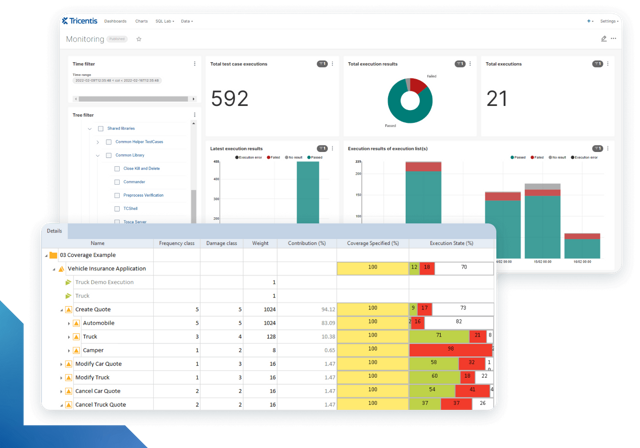
Intelligent test automation software screens

Tricentis Tosca

Learn more about intelligent test automation and how an AI-powered testing tool can optimize enterprise testing.


Author:

Tricentis Staff

Various contributors

Date: Sep. 04, 2026
Intelligent test automation software screens

Tricentis Tosca

Learn more about intelligent test automation and how an AI-powered testing tool can optimize enterprise testing.

Author:

Tricentis Staff

Date: Sep. 04, 2026

Recommended

You might also be interested in...