

Reports & White Papers
3 best practices to deliver high-quality analytical and operational data
Most organizations test data only at critical points, leaving long...
AI performance engineering explains how AI enhances performance testing, scripting, and analysis to build faster, more reliable AI applications.
TL;DR
I remember when I used to work in a company with a mobile-first product. Before every major launch, we’d do a night of “stress-testing,” note down all occurrences of instability, and find the upper limit of our systems.
We would then design plans to counter some of the negative effects, either by reforming the system or by adding guardrails to protect our users from a degraded experience.
This testing is an important part of what we call performance engineering. If we think of software usage from a user point of view, all of us would want faster loads, stability, and accuracy. Performance engineering is a huge aspect of maintaining all of this.
In this article, we’ll explore performance engineering from the lens of artificial intelligence.
AI performance engineering is the discipline of designing, testing, and operating software so it consistently meets performance, scalability, reliability, and efficiency goals, with AI helping automate and improve that work across the lifecycle.
This definition is crucial because performance engineering is already broader than performance testing.
Most of us would think of stress testing/load testing and call it a day, but performance engineering is the larger discipline that shapes architecture, test strategy, SLAs or SLOs, monitoring, capacity decisions, and production feedback.
AI performance engineering adds another layer to this. It uses AI to make all of those activities more practical, continuous, and scalable.
If I were to be succinct about this, I’d say performance engineering is continuous, and performance testing is one activity inside it. AI performance engineering retains that distinction but makes the full practice easier to sustain.
AI performance engineering uses AI to make all of those activities more practical, continuous, and scalable.
Modern software delivery pipelines move swiftly, and AI-accelerated development makes them move even faster, which in turn puts more pressure on testing and performance teams.
Nowadays, releases happen more frequently, code changes touch more systems, and teams have less time to manually create test scenarios, maintain scripts, and inspect large result sets.
This exact pressure is why AI performance engineering is more than a buzzword. It addresses an operational problem where traditional performance work is often too specialized, too late, and too manual to keep up with the speed of current software delivery.
Martin Fowler appropriately captured the broader delivery principle well when writing about Accelerate: “Their evidence refutes the Bimodal IT notion that you have to choose between speed and stability; instead speed depends on stability, so good IT practices give you both.”
This idea is applicable to AI performance engineering. If software teams want to move quickly, performance cannot stay stuck as a manual checkpoint near the end of release validation. It has to become part of the engineering system itself.
AI performance engineering thus exists because teams need that system to be continuous, not occasional.
Traditional performance engineering already aims to make performance part of design, development, testing, and operations. AI performance engineering keeps that same mission. It just changes how much of the repetitive work can be accelerated and how quickly teams can turn test data into decisions.
Here is a clear comparison:
| Area | Traditional performance engineering | AI performance engineering | AI performance testing |
| Primary goal | Build performance into the lifecycle | Build performance into the lifecycle with AI-assisted acceleration and analysis | Use AI to improve how performance tests are created, run, or analyzed |
| Scope | Broad and continuous | Broad and continuous | Narrower, test-focused |
| Test design | Manual or semi-automated | AI-assisted scenario generation and script updates | AI-assisted scenario generation |
| Analysis | Human-led review of results and graphs | AI-assisted anomaly detection, prioritization, and summaries | AI-assisted result analysis |
| Data inputs | Test data, system metrics, production signals | Test data, system metrics, production signals, historical patterns, and contextual workflows | Mostly performance test results and metrics |
| Best use | Mature performance programs | Teams needing scale, speed, and continuous feedback | Teams improving performance test execution |
The key difference is scope. AI performance testing is a capability, and AI performance engineering is a practice. While one improves test execution, the other changes how performance work fits into the delivery lifecycle.
AI performance engineering vs. AI performance testing: it’s an extremely important distinction to make. Let’s clear things up.
AI performance testing focuses on using AI to improve performance testing tasks such as script generation, test maintenance, anomaly detection, and result analysis. It helps a team run better load, stress, or spike tests.
AI performance engineering includes that, but it goes a step further. It connects those testing activities to architecture choices, release readiness, observability, capacity planning, and production learning.
In other words, AI performance testing helps with the test, while AI performance engineering helps with the whole system around the test.
For readers who want the fuller background, Tricentis already has solid primers on performance engineering, performance testing, and AI in performance testing. This article sits at the intersection of all three.
AI performance testing helps with the test, while AI performance engineering helps with the whole system around the test.
We’ve explored the differences between AI performance engineering and other similar paradigms, but it’s important to understand what challenges AI performance engineering helps us address.
The first challenge is scripting bottlenecks. Performance testing has historically required specialist knowledge, especially when a team needs realistic workflows, parameterization, and environment-specific tuning.
AI can reduce that burden by helping generate and maintain test assets faster. AI is good at scouring through the codebase, documents, and other sources. Plus, it builds quick context to produce an initial artifact.
The second challenge is analysis overload. Performance runs generate large volumes of data across response times, throughput, error rates, infrastructure metrics, and user behavior. Manual review is possible but slow. AI can help surface anomalies and patterns much faster from large volumes of data.
The third challenge is context loss. A test result by itself does not always explain business impact. Teams need to know which transaction degraded, which dependency became the bottleneck, which release introduced the drift, and whether the issue matters to users or SLAs.
This is where context-aware workflows, including MCP-connected data and agentic orchestration, can help formalise a process that can help.
The fourth challenge is testing AI-powered applications themselves. Once a product includes embedded LLMs, AI assistants, or agentic workflows, performance questions get harder.
Teams are not just validating a web app under load, but they are also validating prompt latency, concurrency behavior, infrastructure cost, fallback behavior, and response times under changing context lengths.
AI applications tend to create performance problems that look different from traditional application bottlenecks, and thus are also the best use case for being diagnosed via AI strategies.
AI can help analyze patterns, but it cannot define success on its own. This has to be done in conjunction with human reviewers.
A good beginner’s model is to think of AI performance engineering as five connected components:
Teams need clear goals before they run anything, such as response-time expectations, concurrency targets, cost constraints, acceptable degradation thresholds, and business-critical journeys.
AI can help analyze patterns, but it cannot define success on its own. This has to be done in conjunction with human reviewers.
Instead of hand-building every scenario, AI can help generate realistic user journeys, suggest missing paths, update scripts as applications evolve, and reduce test-maintenance overhead. This is a good use of AI to move over the initial hurdles quicker.
This is in conjunction with the previous component. Since AI is good at generating realistic user journeys, we can use this to get an estimate of what realistic load looks like.
We can use this to gauge which paths might be more used than others and thus need a varying strategy for performance evaluations.
Analysis and anomaly detection is one of the highest-leverage AI use cases. AI can help identify abnormal trends, point to likely bottlenecks, compare runs across releases, and summarize large result sets into something engineers and stakeholders can act on quickly.
Performance engineering becomes valuable when teams close the loop. You can visualize the lifecycle like this:
Design goals -> Generate scenarios -> Run under load -> Analyze signals -> Prioritize fixes -> Re-test -> Feed learning into the next release
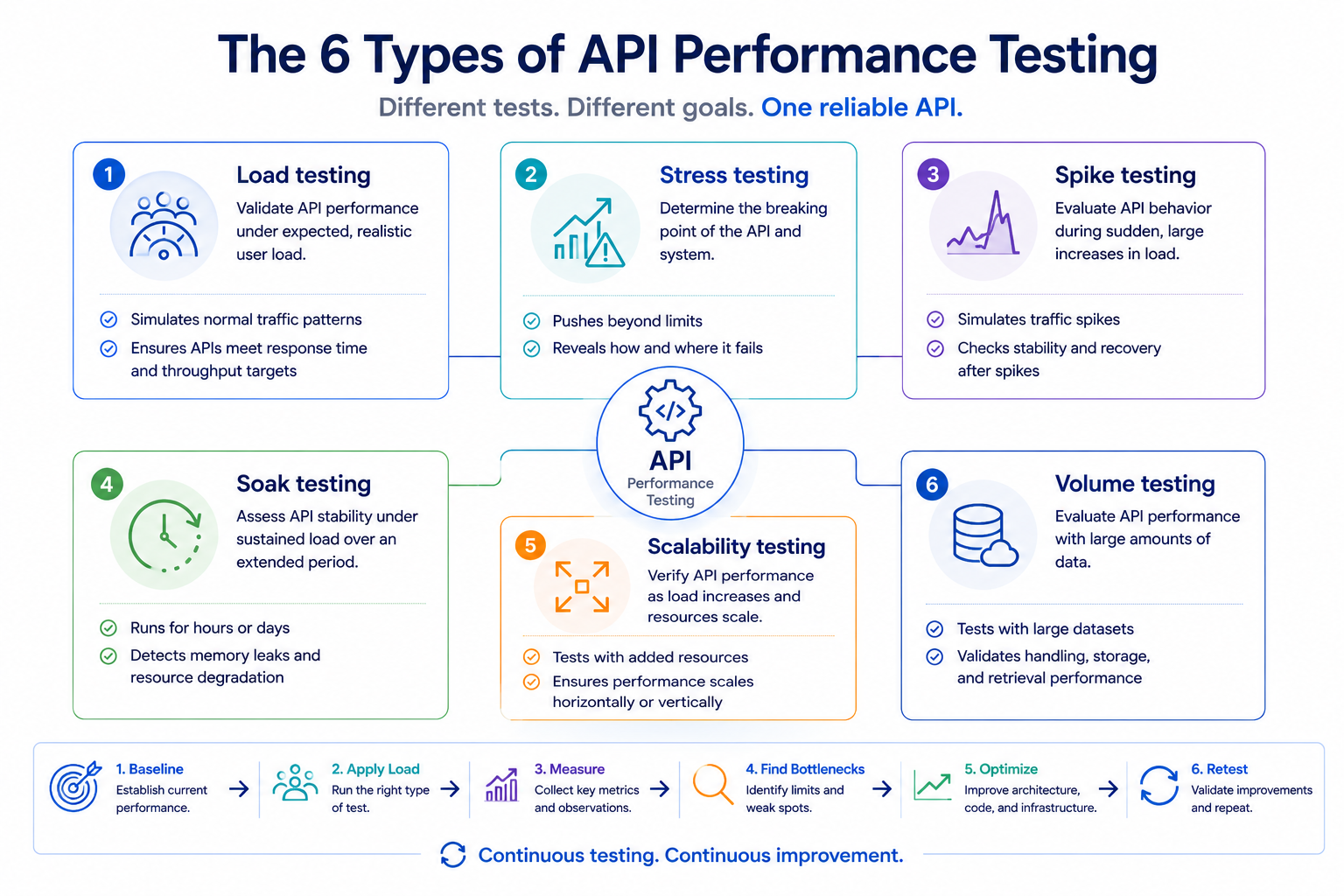
Findings should inform architecture choices, release decisions, production readiness, and future test scenarios.
My best advice for getting started has always been to not have a moonshot from get-go. It is better to start with one application or one critical workflow and build a repeatable loop.
You’ll see me repeat these pointers as golden rules in any adoption strategy.
But what if there was a tool that could help with all these adoption strategies? This is where Tricentis NeoLoad fits naturally.
NeoLoad is an AI-powered performance testing platform that supports codeless and as-code test design, continuous validation across CI/CD, AI-assisted analysis, and agentic workflows for performance testing.
The practical value is not just that it helps run tests, but it helps teams make performance engineering a more continuous process.
Let me use an example to strengthen this:
BARMER, one of Germany’s largest statutory health insurance funds, needed its digital portals, apps, and specialist applications to remain stable under heavy load. Its existing load-testing approach could no longer keep up with agile, DevOps-oriented release cycles.
The team adopted Tricentis NeoLoad to establish continuous performance testing with codeless test design and real browser testing, allowing them to run performance validation more frequently and with less manual effort.
BARMER increased regular load and performance testing frequency by a factor of 45, made script creation and maintenance twice as fast, and increased test coverage by up to 50%. It also established continuous performance testing to surface issues earlier and support weekly release cycles.
Source: BARMER delivers continuous performance testing with Tricentis NeoLoad
Ready to bring AI into your performance engineering practice? See how Tricentis’ agentic testing engineering capabilities help teams build faster, more reliable AI-powered applications: Tricentis NeoLoad.
AI can speed up scenario creation and analysis, but performance goals, acceptance thresholds, and release decisions still need human ownership.
The first best practice is to treat AI as leverage, not as strategy. AI can speed up scenario creation and analysis, but performance goals, acceptance thresholds, and release decisions still need human ownership.
The second is to start with critical paths. This is my golden advice. You might’ve already experienced that not every workload deserves the same depth of testing.
If we use this as a basic guideline, then you can focus first on the transactions, APIs, and user journeys that matter most to customer experience or business continuity.
The third is to connect testing to observability. AI gets more useful when it can correlate test results with real system telemetry and historical behavior.
The fourth is to keep performance validation continuous. The longer teams wait to get around the action items from different processes, the more expensive bottlenecks become to diagnose and fix.
The fifth is to be realistic about AI-powered applications themselves. If your software embeds LLMs or agents, measure prompt latency, concurrency limits, fallback behavior, throughput, and infrastructure consumption, not just classic server response times.
Agentic AI is a natural extension of this practice because performance work is full of repetitive loops such as generating scenarios, running tests, inspecting results, comparing trends, refining parameters, and repeating. An agentic system can help manage more of that cycle.
In extremely practical terms, agentic technology can:
This is why agentic performance testing matters here. It connects automation and expertise more tightly. But the goal is not fully unsupervised control.
The goal is to reduce manual effort while preserving transparency and engineering judgment. The point of agentic AI in performance engineering is not to hand performance off. It is to help teams practice it more consistently.
This post was written by Deboshree Banerjee. Deboshree is a Senior Backend Engineer at Stripe and has previously held engineering roles at Goldman Sachs, Walmart, and tech lead roles at venture-backed startups. Throughout her career she has worked on large-scale distributed systems where data durability, redundancy, security, and operational reliability are critical concerns. Her experience evaluating enterprise software through the lens of scalability, resilience, and data protection informs her analysis of SaaS backup and recovery platforms.

AI performance engineering is the practice of using AI to improve how teams design, test, analyze, and optimize application performance across the software lifecycle. It goes beyond one-off testing by connecting performance work to architecture, CI/CD, observability, and production feedback.
AI performance testing focuses on improving the creation, execution, and analysis of performance tests. AI performance engineering is broader, as it includes testing, but also performance goals, release decisions, production learning, and ongoing optimization.
An AI performance engineer helps design realistic test scenarios, validate system behavior under load, analyze performance signals, identify bottlenecks, and connect those findings back to release and architecture decisions. The role blends classic performance engineering with AI-assisted workflows.