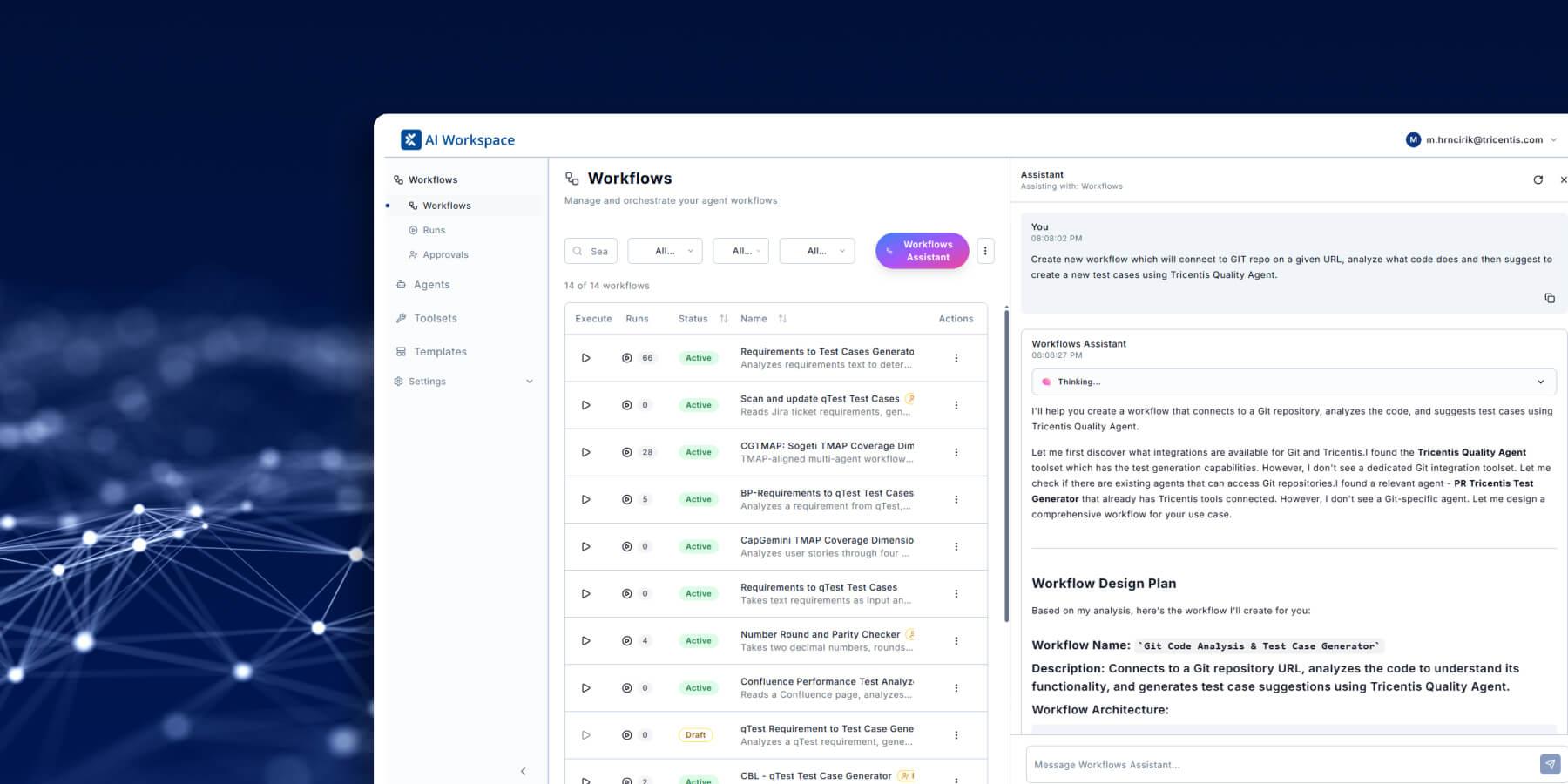
Introducing the first end-to-end enterprise agentic quality platform
AI is generating code faster than enterprises can validate it. The...
Explore key takeaways from the Tricentis Agentic Quality Engineering Platform launch, including AI agents, AI Workspace, and how teams scale quality in the age of AI.
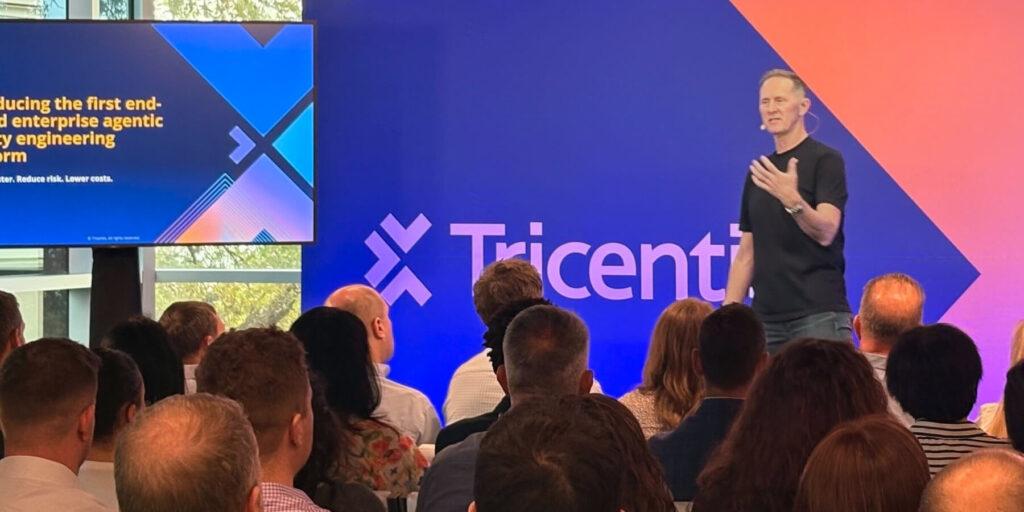
Over 1,000 people around the world tuned in as Tricentis CEO Kevin Thompson and VP of AI David Colwell unveiled our new integrated platform, followed by a live demo from Enterprise Solution Architect Matt Serpone.
From our headquarters in Austin, Texas, we unveiled a unified solution designed to help enterprises treat quality as a coordinated system rather than a collection of disconnected tools. At its core is a managed workforce of AI agents that execute, adapt, and collaborate across quality domains, governed by a control plane (AI Workspace) that orchestrates those agents, enforces governance, and keeps humans in the loop.
Tricentis customers were in attendance, including Wolters Kluwer, an early adopter of AI solutions. Wolters Kluwer is configuring ways to use Agentic Test Creation and AI Workspace to achieve total agentic automation across the entire SDLC, shifting left as far as possible.
Here’s an overview of what was covered at the launch.
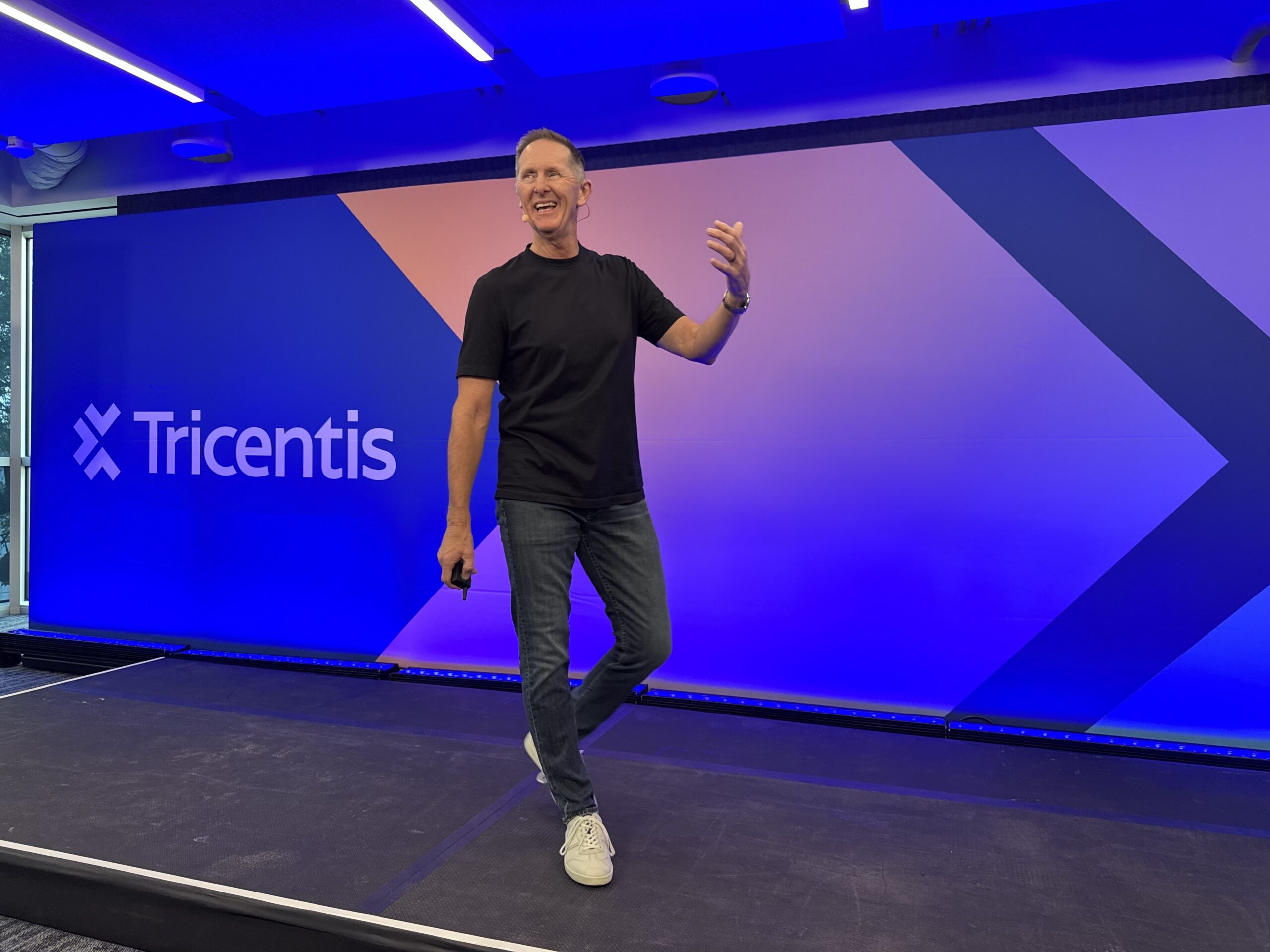
Kevin Thompson opened by laying out the pressures testing teams face right now: speed is accelerating, but quality infrastructure hasn’t kept pace. AI-generated code is a big part of that equation — more output, faster delivery, fewer bottlenecks. But AI writes code based on patterns, not context. It doesn’t know your business environment, the custom integrations built years ago, or the rules quietly holding everything together.
That missing context is where problems start. Minor mistakes attach to automated processes, compound, and ripple downstream. At enterprise scale, one update can trigger cascading effects across thousands of applications. Traditional QA simply wasn’t designed for this level of speed or interconnectedness.
Fragmentation makes it worse. Hybrid environments, multi-cloud structures, and on-prem systems running mission-critical workloads make end-to-end validation incredibly difficult. When QA and DevOps rely on manual checkpoints or siloed automation, risk hides in the seams.
Then there’s the governance question. As AI becomes more embedded in development, enterprises need intelligence woven into every step of the lifecycle. Agents that understand not just what changed, but what that change means.
Rather than treating AI-generated code as just another output to test, the Tricentis approach reframes the task entirely: the testing and governance of AI-created work needs to evolve at the same pace as the AI itself, or ideally, one step ahead.
In our newest solution, purpose-built intelligent agents take on the heavy lifting, bringing context that humans alone can’t maintain at scale. They understand application relationships, past changes, known patterns, and the constraints of enterprise environments, and they operate continuously, keeping pace with AI-driven development in a way that manual processes never could.
Tricentis solutions already help teams organize, automate, and scale their testing. Agentic quality engineering builds on that foundation, giving enterprises a guardrail system that keeps the entire software lifecycle on track without asking teams to work harder than they already are.
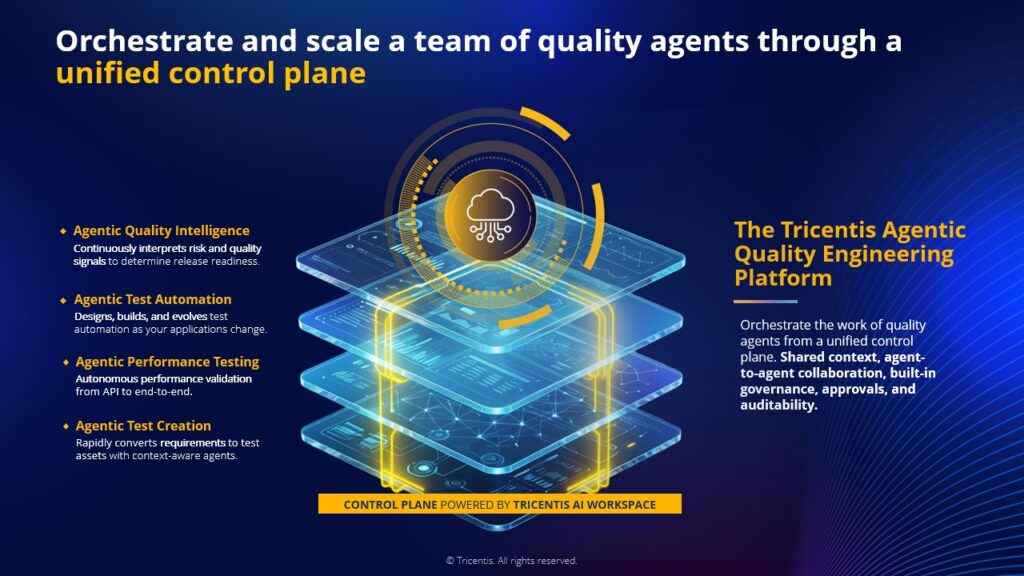
The new Tricentis Agentic Quality Engineering Platform brings together four intelligent agents and a centralized control plane called AI Workspace, which orchestrates agent behavior, governs their actions, and creates an auditable trail of decisions across the software development lifecycle.
As David Colwell put it: “AI is the wave, and if you don’t paddle fast enough, it runs you over.” Engineering teams are generating code at a scale that would have taken months just a year ago, but nobody wants to merge it without confidence it actually works. Agentic testing is the answer to the bottleneck holding back all the productivity that agentic development promises.
AI Workspace connects your existing tools — Jira, GitHub, qTest, Tosca — into custom agentic workflows. And rather than building agents yourself, the platform comes with a suite of pre-built, benchmarked, deployment-ready quality engineering agents.
The four agents designed to implement workflows are:
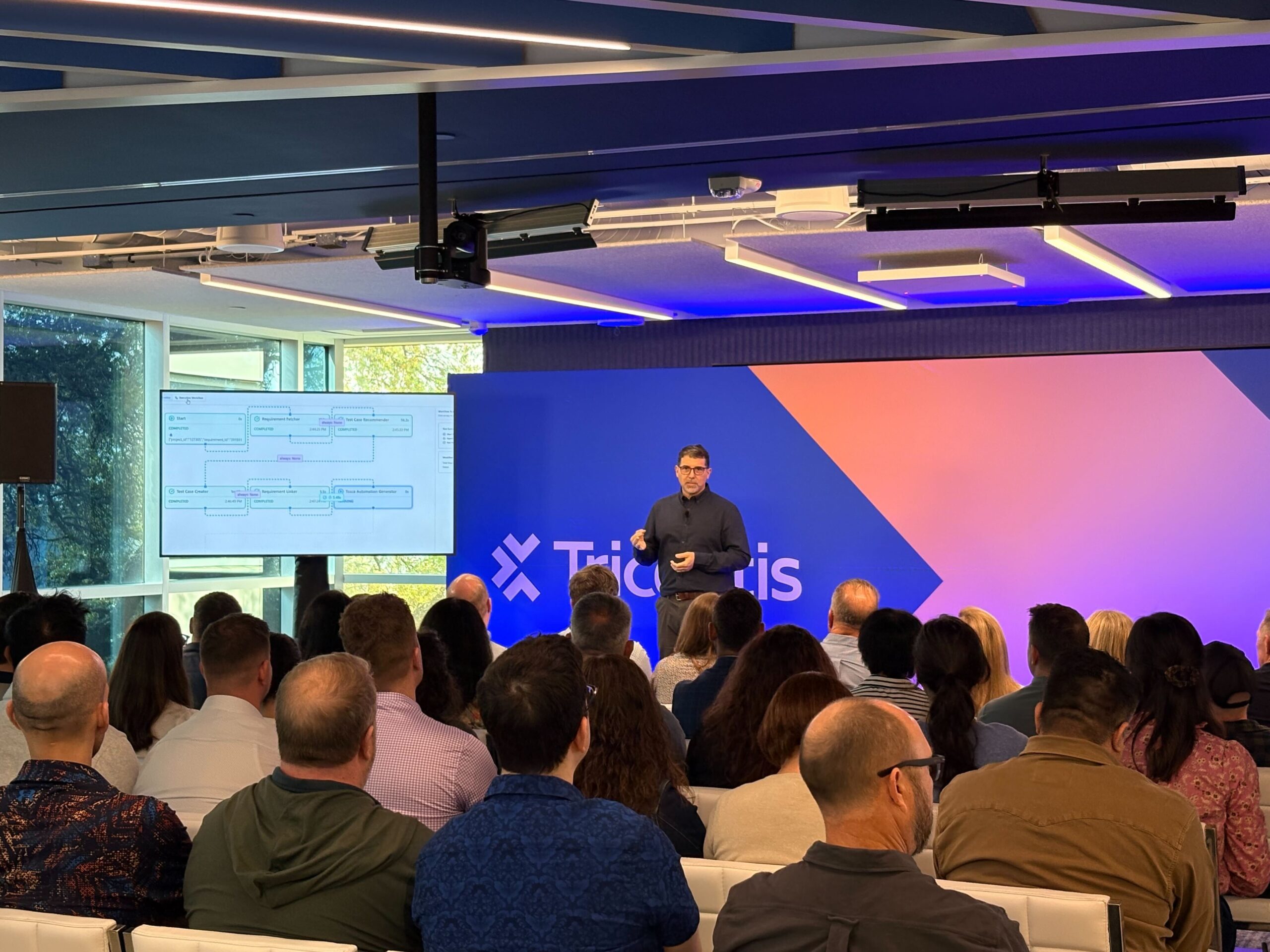
Matt Serpone concluded the presentation by showing the value offered through our agentic platform. He showcased four key areas in the demo:
Watch a recording of the full launch presentation here, to see the full live demo.