
A practical guide to continuous performance testing
Performance engineers get "why” to automate performance testing in...
NeoLoad introduced breakthrough innovations in 2025 — from built-in AI analysis to MCP and RealBrowser Core Web Vitals. In 2026, it’s going even further with a performance agent, reverse communication agent, and expanded SAP integration to make performance testing smarter and faster than ever.

Tricentis NeoLoad introduced breakthrough innovations in 2025, from built-in AI analysis to MCP and RealBrowser Core Web Vitals. Our vision for 2026 is to build on this innovation, empowering our customers to identify and eliminate performance bottlenecks faster and more intelligently than ever before.
In the coming year, NeoLoad will continue to provide the advanced foundational features to support effective performance engineering practices as well as intelligent workflows that enable quality and performance teams to work more efficiently than ever before.
But to fully appreciate the advancements to come in 2026, let’s review just some of the progress from 2025.
Artificial intelligence became an integral part of NeoLoad in 2025.
Starting with NeoLoad 2025.1, we launched our built-in AI engine, Augmented Analysis, to help teams quickly spot and resolve issues by analyzing RED metrics, flagging anomalies, and guiding them to the root causes of performance problems. Since the initial rollout, we have expanded beyond RED metrics to include virtual user (VU) analysis to isolate and analyze VU and load profiles as well.
With the inclusion of both RED and VU metric analysis, teams can now leverage AI to accelerate analysis across a variety of metrics at a glance through easy-to-consume intervals while still having the option to dig into detailed results when needed.
NeoLoad was also the first to roll out a Model Context Protocol (MCP), providing a standardized, secure way for teams to use LLMs and natural language prompts to direct NeoLoad as it runs tests, configures infrastructure, adjusts scenarios and populations, interprets results, generates reports, and more.
The MCP enables experts and non-experts to automate complex tasks and orchestrate workflows seamlessly across Tricentis and third-party tools, opening the door for a whole new way to integrate performance easily across tools and teams.
Read more: Evolving performance analysis with NeoLoad and AI
The release of next-generation NeoLoad Web and the fully open V4 API marked a major architectural shift for NeoLoad, establishing the future for our centralized, cloud-based performance testing platform.
The updated interface provides a more unified and intuitive experience across the Tricentis ecosystem, improving how teams collaborate, analyze, and share results. The V4 API gives customers more flexibility to integrate NeoLoad into CI/CD pipelines and allows teams to automate and scale performance testing workflows more precisely.
This newly redesigned platform has allowed for our rapid AI innovation and provides our users access to continuous innovation. Recent enhancements such as the Treeview report in NeoLoad Web also make it easier to share performance findings across teams so they can quickly isolate issues, compare performance across components, and accelerate root cause analysis.
NeoLoad made strides in 2025 to ensure it remains the most comprehensive and adaptable performance testing tool across the full technology stack, from API and microservices-based architectures to critical modern ERPs, legacy systems, and business-driving web applications.
NeoLoad became the first performance testing solution to offer native support for SAP IDoc and added SAP RFC coverage, enabling end-to-end performance validation of SAP and non-SAP integration scenarios. This is particularly useful for undergoing RISE with SAP S/4HANA migrations and ensuring continued performance in highly integrated environments once live.
Support for legacy systems also grew with the addition of TN5250 terminal emulation, allowing teams to test AS/400 and mainframe applications, building on the Remote Terminal Emulation (RTE) bundle released in NeoLoad 2024.3.
Finally, RealBrowser introduced Core Web Vitals to align with Google’s defined performance metrics and provide a clearer view of user experience under load. Visibility into these metrics helps teams validate responsiveness and visual stability before release while optimizing search engine rankings.
NeoLoad 2025 also introduced several improvements that increased scalability and security for customers. Two of the most notable include:
A new high-capacity Cloud Load Generator option added 16 CPU and 64 GB RAM configurations, allowing larger scale and more resource intensive tests to run directly in the cloud without the need to configure multiple load generators.
NeoLoad Web on-premises enabled SSO support via SAML 2.0, making it possible to connect with your organization’s identity provider and enable policy-based authentication for performance testing users.
Watch it back: NeoLoad introduces expanded AI-driven workflows, Core Web Vitals, and more
The 2026 NeoLoad roadmap builds upon everything we delivered in 2025 to advance the future of performance engineering. We will arm teams with more features that enable intelligent, efficient, and scalable performance testing that meets the demands of modern software delivery on increasingly complex environments.
Chief among our roadmap highlights is a performance agent designed to be the newest member of your performance team.
Initial plans for the performance agent include taking on many of the manually intensive and time-consuming tasks that slow teams down today. By automating routine steps across test design and helping interpret results more efficiently, it gives engineers the ability to focus on strategic decisions and initiatives rather than repetitive setup or investigative work. This shift helps teams move faster and maintain accuracy while keeping pace with modern delivery cycles.
Future plans for the performance agent include a broader set of tasks across all phases of performance testing, continually reducing the manual effort required to create, execute, maintain, and interpret performance tests. Through all phases of delivery, its purpose will be to remove friction from performance engineering and allow teams to effectively scale their expertise to support the ever-increasing pace of delivery that quality and performance teams need to manage.
This sets a clear path toward a future where autonomous performance testing becomes not only possible, but practical for organizations of all sizes.
Our roadmap also includes plans to make it easier and more secure for large enterprises to adopt NeoLoad SaaS. By removing the need for inbound firewall rules, we plan to simplify cloud connectivity and ease common security concerns, helping organizations take advantage of the latest innovations in NeoLoad Web without the usual frustrations associated with internal IT hurdles.
For development and DevOps teams, upcoming updates will also make it easier to get started with performance testing earlier in the software lifecycle. Enhanced shift-left models are being designed to streamline onboarding of NeoLoad’s robust early-stage testing capabilities, so more teams can easily integrate performance checks into builds and pipelines from the start.
Together with AI-powered features like the MCP and new Performance Agent, these changes are all about accelerating feedback, reducing last-minute surprises, and making continuous performance testing more accessible across the delivery process throughout your organization.
We are also working towards expanding our performance testing leadership to support SAP transformation projects by embedding performance testing directly into the SAP Integrated Toolchain. This planned integration will further align NeoLoad with SAP’s native methodologies and recommended toolsets, making it easier for teams to validate performance throughout the entire lifecycle of an SAP project.
For SAP customers, this will mean less manual coordination, faster transformation timelines, and greater confidence that performance won’t be compromised.
In early 2026, we’ll host a webinar to walk through 2025’s innovations in detail and share an exclusive preview of what’s to come.
Register here to get a first look at our plans.
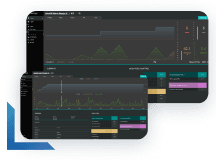
Learn more about continuous performance testing and how to deliver performance at scale.
Learn more about continuous performance testing and how to deliver performance at scale.