
Addressing the top 5 data integrity challenges: Insights from experts
Learn how to tackle top data integrity challenges and ensure reliable,...
Data quality focuses on fixing isolated issues, but modern organizations need data integrity: continuous, lifecycle-wide validation that prevents silent errors, reduces rework, protects AI initiatives, and strengthens decision making. Learn the steps to build a data integrity program and why it’s becoming essential across the business.

Key takeaways:
Many organizations run data quality programs that, on the surface, serve teams well enough. They validate data, flag missing fields, remove duplicates, and reconcile reports. Most of the time, that feels secure enough.
When teams collaborate and compare datasets, discrepancies often appear but are dismissed as negligible. Fixing them is built into workflows and job descriptions, even if it takes hours or days.
This approach is starting to show its age.
As organizations introduce AI into core systems and raise expectations around reliable, decision-grade data, siloed and simplified data quality programs are no longer sufficient. The next phase of data quality is data integrity.
Data quality is an important component of a data integrity strategy, but it isn’t the strategy itself.
Data quality focuses on individual datasets and isolated fixes.
Data integrity ensures that data is reliable across its full lifecycle. Continuously validating and reconciling data as it moves between systems Assigning clear ownership and accountability for corrections and oversights Identifying subtle errors before they escalate
Relying solely on data quality programs in your organization can create a false sense of security.
Cleaning and validating data at a single point in time improves it locally but doesn’t account for how it moves across teams and systems. As data flows from source to target systems, formats and schema can change, context can get lost, and business rules can be misinterpreted. Small discrepancies that seemed harmless in one system can propagate unnoticed and undermine reporting, decision-making, and compliance.
Siloed quality programs tend to surface issues late. When discrepancies are discovered during an audit or review, teams scramble to investigate and reconcile data under pressure. The rework is expensive, manual, and error prone.
Quality-only approaches often apply the same checks everywhere, even though many organizations rely on a relatively small number of datasets to make critical decisions. Those datasets deserve stricter oversight and higher standards.
As AI models are introduced, even minor data problems can cause substantial financial, reputational, or regulatory damage. Training models on unchecked or inconsistently maintained data accelerates risk instead of insight.
Read more: The rise of AI agent sprawl: Why data integrity is your first line of defense
A data quality strategy is inherently reactive. Data integrity is proactive — it’s designed to prevent issues from affecting operations in the first place. Without it, organizations remain exposed to silent errors and late detection.
A robust data integrity strategy goes beyond periodic validation and auditing. It ensures that data is continuously reliable and actionable. Here’s how to upgrade your data quality program to a full data integrity strategy.
Review your existing data quality efforts and identify coverage gaps. Pay special attention to anywhere data has a chance to transform — within ETL pipelines, intermediate storage layers, and analytics and reporting tools, or at any other stage where it is manipulated, moved, or processed — because this is when a small issue can slip through unnoticed and compound over time.
Why it matters: Most data issues aren’t introduced when the data is idle. They happen when it moves. A typical enterprise data journey will move through dozens of different systems.
Identify your organization’s most important datasets — the ones that must always be reliable for the business to run correctly. These are usually the datasets that directly impact business decisions, financial reporting, compliance, and customer experience.
Why it matters: Applying equal scrutiny across all datasets will spread teams thin and leave the most important data vulnerable. Start with what’s critical and scale from there.
The shift from point-in-time checks to continuous validation is one of the most important parts of a data integrity strategy. Data should be verified at each point on its journey as it flows between systems. Tools like Tricentis Data Integrity automate end-to-end testing and ensure consistency and completeness across the full business ecosystem.
Why it matters: Early detection prevents downstream rework, lowers the cost of fixing errors, and prevents flawed business decision-making.
Every critical dataset should have a clearly defined owner responsible for accuracy and corrective action.
Why it matters: When no one owns the data, it’s unclear whose job it is to fix data issues.
Watch it back: The role of data integrity in establishing an effective data governance program
Implement trend analysis and anomaly detection to surface issues that don’t trigger obvious errors. These signals help identify slow-building problems, such as gradual data drift or inconsistent transformations.
Why it matters: The most damaging data issues are often the ones that stay invisible the longest.
Moving from a quality approach to an integrity is no small task, but the benefits are well-documented:
Technology alone is not enough; leadership and governance must define the strategy and scope. With the right combination of tools and intent, organizations can move toward consistently trustworthy data across the organization.
Webinar: Addressing the top 5 data integrity challenges: Insights from experts
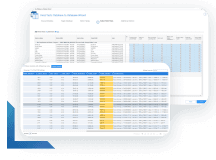
Learn more about driving better business outcomes with high-quality, trustworthy data.
Learn more about driving better business outcomes with high-quality, trustworthy data.