
BI/DWH testing: Why automation is imperative
Learn how applying DevOps-style test automation to data warehouse/BI...
When leaders don’t trust their data, decisions slow and risk rises. This article explains why data trust breaks down and how continuous, automated validation restores confidence across the business.

Do you trust the data your business runs on?
Many business leaders I speak with admit they don’t, at least not fully. They find themselves second-guessing dashboards, pulling manual reports “just to be sure,” or worse, relying on gut instinct to make critical decisions.
This lack of data trust isn’t just an inconvenience; it’s a business problem. When data is supposed to be your greatest asset, it’s alarming how many organizations are held back by doubts about its integrity.
This uncertainty slows down decision-making, introduces operational risk, and creates widespread frustration.
The consequences of poor data quality are felt across the entire enterprise.
Consider the explosive growth of artificial intelligence. It’s a powerful tool, but its effectiveness is entirely dependent on the quality of the data it’s fed.
This isn’t just a theoretical problem. One organization I’ve spoken to needed to validate more than 50 reports by checking data before and after a major migration. Some of this data formed the foundation of its quarterly financial reporting. Its process involved teams manually comparing data sets line by line.
In the current business climate, this approach is not sustainable. It’s slow, expensive, and error-prone.
When you can’t trust your data, you experience a ripple effect of negative outcomes:
Most companies aren’t struggling with a lack of data, they are overwhelmed by massive volumes of it, often scattered across disconnected systems. Data is constantly moving, being transformed through complex and often opaque pipelines before it ever reaches a report or a dashboard.
Without a mechanism to continuously validate data at every stage of its journey, it’s nearly impossible to guarantee its accuracy, completeness, or timeliness.
By the time an error is spotted in a final report, it’s often too late. The damage may already be done, and tracing the issue back to its source can be a monumental task.
This reactive approach leaves organizations in a constant state of uncertainty.
The solution is to move from a reactive, manual approach to a proactive, automated one. Building true data trust requires a commitment to end-to-end data integrity. This means validating data as it moves across your systems, from its source all the way to the end user.
At Tricentis, we help organizations close this data trust gap. We provide the tools to continuously validate data throughout the entire data pipeline. This isn’t about spot-checking a file or a report; it’s about embedding quality checks directly into your data flows.
Here’s how this approach helps:
By embedding automated data validation into your processes, you build a foundation of trust that allows your organization to move faster and make smarter decisions.
Operating with untrustworthy data forces your teams to rely on guesswork. It undermines your strategies, puts your operations at risk, and prevents you from realizing the full value of your technology investments, including AI.
Building a culture of data trust empowers your people to make confident decisions backed by reliable information. It ensures your business processes run efficiently and, most importantly, it gives you a solid foundation upon which to innovate and grow.
Don’t let your data be a source of uncertainty. It’s time to build a system that ensures your business can trust what your data says.
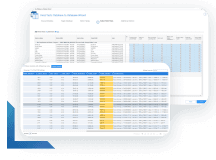
Learn more about driving better business outcomes with high-quality, trustworthy data.
Learn more about driving better business outcomes with high-quality, trustworthy data.