

Webinars
Curb cart abandonment: 4 browser-based testing strategies for improving the online shopping experience
Elevate your online retail game with cutting-edge web performance...
Conversion testing is the practice of using controlled experiments to learn what makes more users act. Let’s learn more.

As a business in the modern era, you work hard for every website visit. Doing extensive marketing and optimizing the user experience is expensive and time-consuming. Don’t leave conversion to luck. Think of your site as a store with a finicky front door.
Sometimes, it opens flawlessly. Sometimes, it jams. Conversion testing is you, the savvy shop owner oiling the hinges with data, making sure it works well every day.
In this post, we’ll explore what conversion testing is, why it matters, how to run it, and how to avoid sneaky pitfalls. The steps will be practical and handy, so you can do your best work and get those leads.
Let’s jump right in.
Conversion testing is the practice of using controlled experiments to learn what makes more users act
Conversion testing is the practice of using controlled experiments to learn what makes more users act. “Act” in this case is referring to a purchase, a sign-up (if your goal is collecting data), a demo request to develop interest, or a download.
In the process of conversion testing, you serve different versions of your site to different users and then measure which version produces better results. The variations can be as simple as different button colors or as extensive as a different layout or structure.
This data-driven practice allows you to make decisions on your site with the right knowledge and maximize the results. It’s straightforward and powerful.
This exercise is commonly referred to as A/B testing, where A is one version and B is another. As the Nielsen Norman Group states: “A/B testing is a quantitative research method that tests two or more design variations with a live audience.”
A/B testing allows you to test ideas with real visitors and real outcomes. You’re not guessing anymore.
Here’s a fun fact. Marketers borrowed the idea of A/B testing, or “split tests” as they referred to it back then, from direct mail. Remember direct mail? Naturally, the web supercharged it. Tools like Optimizely and VWO made experiments easy for non-developers.
The mindset shifted from loud opinions to measured bets. Today, teams treat experiments as routine, and that culture produces steady gains over time.
Conversion testing lives inside your optimization loop:
The whole process complements usability testing and analytics like a perfect marriage. Usability shows why people struggle. Analytics shows where they drop off. Experiments prove what change improves outcomes.
You don’t always need more traffic. What you really need is more action from that traffic. That’s cheaper and faster to compound. By focusing on that, you can achieve:
Different questions call for different methods. Pick the one that best fits the risk and scope of your goals.
Your daily driver. A/B testing compares a control against one challenger. Change one meaningful thing. Measure the impact and change accordingly.
Use it when: You’re testing a single element, like a headline or CTA, and you want a clear causal read.
Pros: Simple to run and interpret.
Cons: Answers one question at a time.
Radical redesigns are best tested using an A/B experiment, while multivariate tests indicate how various UI elements interact
Sometimes, it’s not about how one element changes the experience, but how they all relate to each other. Multivariate testing (MVT) tries combinations of multiple elements. It reveals interactions, not just single-element effects. Think “two headlines x two images x two CTAs.”
As the Nielsen Norman Group summarizes: “Radical redesigns are best tested using an A/B experiment, while multivariate tests indicate how various UI elements interact.”
Use it when: You have heavy traffic and suspect element interactions.
Watch out: If you need lots of visitors to reach significance across combinations.
Split URL tests are all about big swings. This method compares entire pages at different URLs. This means different designs, layouts, structures, and formats. This is ideal for evaluating major changes or different templates.
Use it when: You’re exploring a radical redesign or a different flow.
Watch out: Manage redirects, tracking, and SEO carefully.
Finally, multi-armed bandit testing focuses on optimizing during the test run. The bandit algorithms reallocate traffic to better-performing variants as data arrives. They favor “maximize now” over “prove with significance.”
Use it when: You have short promotional windows or rapidly changing offers.
Prefer A/B testing when: You need clear, statistically rigorous learning.
Running a conversion test is an art, but it does not have to be intimidating. Here’s a practical, repeatable flow you can follow.
Pick one conversion and one success metric. For example:
Use analytics to locate drop-offs. Pair that with heatmaps or session replays to spot friction. Prioritize pages with traffic and pain.
Make it specific and falsifiable. Examples:
Evaluate your challenges and pick the right test to tackle them.
Change one meaningful thing per A/B. Keep everything else stable. Avoid stealthy scope creep.
In general, it’s recommended to aim for four full weeks and 100-200 conversions per variant at 95% confidence, when feasible. Additionally, use a duration or sample size calculator from VWO or Unbounce to plan responsibility.
Confirm significance. Check for side effects, like average order value changes. Finally, ship the best performer. Don’t forget to record results and insights.
Okay, let’s put this knowledge into practice. Let’s build a simple A/B test case HTML page for a call to action (CTA). For this exercise, we’ll first randomly assign a variant. Then we’ll render the chosen CTA label and then track the conversion click with Google Analytics GA4 gtag.
We’ll assume that you already loaded GA4 with gtag on the page, and that you’ve sent a generate_lead (or similar) event.
```html

<!-- Minimal CTA block with two labels -->

<button id="cta"></button>


<script>

// 1) Assign a variant and persist it

const assignVariant = () => {

const saved = localStorage.getItem('cta_variant');

if (saved) return saved;

const v = Math.random() < 0.5 ? 'A' : 'B';

localStorage.setItem('cta_variant', v);

return v;

};


const variant = assignVariant();


// 2) Render the variant

const cta = document.getElementById('cta');

cta.textContent = variant === 'A' ? 'Get Started' : 'Start Your Free Trial';


// Optional styling hook

cta.dataset.variant = variant;


// 3) Track the click with GA4

cta.addEventListener('click', () => {

if (window.gtag) {

gtag('event', 'generate_lead', {

variant,

page_location: window.location.href

});

}

// your normal click handler here

});

</script>

```
It’s just that simple.
To use it, first pick one KPI, like trial starts, and decide on the CTA copy change. Launch with a 50/50 split and run it for a specific duration. Then, compare the conversion rate between A and B. Whatever performed better, that’s the winner. Don’t forget to record your findings.
This is a simple pattern by design. It isolates the variable, logs the event, and avoids cross-session flapping.
Choosing what to test first is all about understanding where impact meets feasibility.
Remember, A/B tests answer the single-element question. Multivariate tests, on the other hand, reveal interactions across elements. So, make sure you know which tools in your arsenal can give you the most bang for your buck.
Now, if you want to maximize your conversion rate as quickly and effectively as possible, it’s crucial that you follow these best practices.
Tools like Tricentis will help your team to bring discipline and repeatability in your testing cycle, be it centralizing insights, running experiments, or aligning your testing with business goals.
Take your testing strategy further – Explore Tricentis for a free trial or request a demo
Pick one goal, target the bottleneck, choose the right test type, run long enough, and ship the winner
Conversion testing turns hunches into wins. Now that you understand the playbook, try it yourself. Pick one goal, target the bottleneck, choose the right test type, run long enough, and ship the winner. With that, you can boost your conversion rate to its maximum potential. But remember, keep your experiments small, your metrics honest, and your curiosity high.
Next steps:
This post was written by Juan Reyes. As an entrepreneur, skilled engineer, and mental health champion, Juan pursues sustainable self-growth, embodying leadership, wit, and passion. With over 15 years of experience in the tech industry, Juan has had the opportunity to work with some of the most prominent players in mobile development, web development, and e-commerce in Japan and the US.
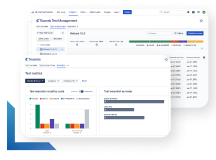
Learn how to supercharge your quality engineering journey with our advanced testing solutions.
Learn how to supercharge your quality engineering journey with our advanced testing solutions.