

eBooks & Guides
Avoiding the poor release blame game: The secret to alignment between developers and testers
Bridge the gap between dev and QA. Align teams, eliminate blame, and...
Error guessing is a testing design technique that relies on a tester’s experience to anticipate likely defects.

Sometimes you can spot a bug miles away. Not because you have X-ray vision or psychic powers, but because you’ve seen patterns.
New features often break in familiar places: dates, file uploads, money math, flaky network calls, and the “one weird character” that explodes a form. That instinct has a name in testing: error guessing.
In this post, we’ll break down what error guessing is, why it matters, when to use it, how to do it well, and where it falls short.
Error guessing is an informal testing design technique that relies on a tester’s experience to anticipate likely defects and design tests to expose them. The concise ISTQB definition says: “A test design technique where the experience of the tester is used to anticipate what defects might be present.”
In plain terms: you use domain knowledge, past bug patterns, and product intuition to guess where the software is fragile. Then you craft focused tests to poke at exactly those weak spots.
Now, it’s important to be clear that we are not taking random shots. We are forming hypotheses based on signals: risky code changes, complex logic, vague requirements, or incident history. Good error guessing looks almost scientific: observe, hypothesize, probe, learn, repeat.
Error guessing aims to reveal high-risk defects fast, especially ones that scripted test cases miss
You and I see patterns. We remember where similar systems cracked before. Also, we smell risk in vague requirements. We know “harmless” refactors are rarely harmless. That knowledge speeds discovery.
Error guessing aims to reveal high-risk defects fast, especially ones that scripted test cases miss. It helps:
Let’s be clear: error guessing is not meant to be a replacement for systematic test design. It’s meant to be a multiplier that catches the “unknown unknowns” sooner.
Error guessing should be your first approach when your risk antenna is buzzing, especially when:
In general, error guessing is tool-agnostic, but certain aids make it systematic and repeatable. Here are some:
In the end, you don’t need a heavy framework. All you need are good prompts and tight feedback loops.
Let’s run a simple case. A checkout service must round currency properly. We suspect repeating decimals will cause drift across the client and server.
Charter: “Find rounding and precision bugs in currency conversion and partial refunds.”
Hypothesis: Amounts like 0.1 or 0.33 might round differently across services. Partial refunds may drift by one cent.
Probes:
Below is a small Python sketch. It models a vulnerable calculator. It then runs a few checks that mirror our probes.
```python
# currency_rounding_test.py
from decimal import Decimal, ROUND_HALF_UP

def charge_total(amounts):
  # Simulate client rounding at two decimals
  total = sum(Decimal(str(a)) for a in amounts)
  return total.quantize(Decimal("0.01"), rounding=ROUND_HALF_UP)

def apply_refund(original, refund):
  # Simulate server ledger using banker's rounding by mistake
  return (Decimal(str(original)) - Decimal(str(refund))).quantize(Decimal("0.01"))

def test_partial_refund_drift():
  original = charge_total([1.10]) # client total
  after_first = apply_refund(original, 0.33)
  after_second = apply_refund(after_first, 0.77)
  assert after_second == Decimal("0.00"), f"Drift found: {after_second}"

def test_repeating_decimals():
  total = charge_total([0.1, 0.2]) # classic float trap avoided with Decimal
  assert total == Decimal("0.30"), f"Bad rounding: {total}"
```
Run these checks. If they fail, capture the inputs, outputs, and environment. Hand that to the developer with clear business impact.
To run a successful error guessing session, it’s recommended to use a short, repeatable routine. Timebox each step.
This routine keeps intuition disciplined and will help you find more in less time.
Now that we have demystified error guessing and clarified that it is indeed not just a guessing exercise, let’s define the best practices to achieve success in the process.
Teams sometimes compare error guessing with error seeding. Error seeding (also called debugging) means you add known faults to estimate test effectiveness and remaining defects.
Error guessing thrives on documentation and traceability. That is where Tricentis can help most.
Tricentis will not “do” error guessing for you. It will help you capture, prioritize, and scale what you discover.
Error guessing turns experience into targeted tests
Error guessing turns experience into targeted tests. It finds the weird, costly failures that structured methods miss. Keep it disciplined. Work from a charter. Carry “nasty” data. Probe transitions and state. Capture everything. Then turn what works into automation.
Do this weekly, and your instincts will sharpen. Your defect curve will bend in your favor. You will ship with more confidence and fewer surprises.
This post was written by Juan Reyes. As an entrepreneur, skilled engineer, and mental health champion, Juan pursues sustainable self-growth, embodying leadership, wit, and passion. With over 15 years of experience in the tech industry, Juan has had the opportunity to work with some of the most prominent players in mobile development, web development, and e-commerce in Japan and the US.
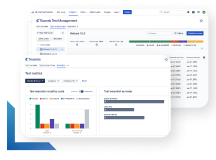
Learn how to supercharge your quality engineering journey with our advanced testing solutions.
Learn how to supercharge your quality engineering journey with our advanced testing solutions.