

eBooks & Guides
Avoiding the poor release blame game: The secret to alignment between developers and testers
Bridge the gap between dev and QA. Align teams, eliminate blame, and...
Learn the key differences between unit and functional testing, their purposes, and how to use both for complete software quality.

Although they have similar goals—checking the accuracy of software—unit tests and functional tests differ in scope, technique, design, and approach. These differences make them unique, and each is suitable for specific testing needs.
According to a Stack Overflow response from seasoned software engineer Anthony Forloney, “Unit tests tell a developer the code is doing things right; functional tests tell the developer the code is doing the right things.
In this article, I’ll explain the difference between unit testing and functional testing in detail. You’ll understand how their scope, techniques, design, and workflow differ. This will guide you when choosing the right testing type for your project.
As Christy Manjila puts it in the article What is Unit Testing? – A Complete Guide, “Unit testing involves testing individual components or pieces of code (units) to verify that each function correctly in isolation.”
In other words, unit tests check that the individual units of code that make up part of the software are bug-free.
For example, when you employ unit tests on an authentication system, you write test scripts for the verification code, form submission function, and input validation code.
This confirms their individual behaviour reflects what is expected and ensures they meet the general software specification.
In summary, unit tests help you verify system correctness by testing each piece of code independently. And if you want to learn even more about the value of unit testing, including other best practices and their benefits, you can check out our blog post on the subject here.
Unit testing involves testing individual components or pieces of code (units) to verify that each function correctly in isolation.
Unlike unit tests, functional tests don’t verify the performance of small units of software in isolation; rather, they check if the components work together as expected.
Basically, functional testing won’t tell you how the software’s components work in isolation, but it will check if the software meets requirements and specifications. Again, “functional tests tell the developer the code is doing the right things.”
Functional testing is important because smaller fractions of your code might work perfectly in isolation but behave inconsistently when tested under real conditions or with real data.
For instance, let’s look at the authentication example again. The verification logic might work perfectly when you test it alone but crash when multiple users start using it at once.
Therefore, it’s important to run a functional test on the system, even if it passes the unit test. This is because functional tests will make sure that the system doesn’t break when real users come into the picture.
Both unit and functional tests validate software behavior, but they are not the same. Key differences in technique and scope make each of them suitable for different testing goals.
Let’s dig into this a little deeper.
Unit tests work by testing a smaller, isolated unit of code (usually individual functions, classes, or methods) in the application without involving other parts of the application. Functional tests, on the other hand, work by interacting with the application the way a real user would. For instance, let’s consider the login application below:
const express = require("express");

const app = express();

app.use(express.json());

function submitLogin(username, password) {
  return username === "admin" && password === "password123";
}

app.post("/login", (req, res) => {
  const { username, password } = req.body;

  if (submitLogin(username, password)) {
    return res.status(200).json({ message: "Login successful" });
  }

  return res.status(401).json({ message: "Invalid credentials" });
});

module.exports = { app, submitLogin };
If you want to verify how the submit function works, you can write a unit test like the example below:
const { submitLogin } = require("./app");

test("returns true for valid credentials", () => {
  expect(submitLogin("admin", "password123")).toBe(true);
});

test("returns false for invalid credentials", () => {
  expect(submitLogin("admin", "wrongpassword")).toBe(false);
});
This test will check the submitLogin function without trying to start the server or making any HTTP requests. It will do this in a fast and isolated way.
But if you want to check how the login application responds to users’ interaction, then you can perform a functional test like the example below:
const request = require("supertest");
const { app } = require("./app");

test("logs in successfully with correct credentials", async () => {
  const response = await request(app)
    .post("/login")
    .send({ username: "admin", password: "password123" });

  expect(response.statusCode).toBe(200);
  expect(response.body.message).toBe("Login successful");
});
This test will send a real request to the /login route using routing, middleware, and other logic to simulate real user behavior and test the application as a whole.
Both functional tests and unit tests confirm the correctness of the system, but their approaches give them different primary purposes. While unit tests verify the working logic of small units of the system’s code, functional tests verify that the complete system works perfectly, as required.
A functional test is designed to implement a black-box testing approach, where the tester doesn’t need to know the internal working logic of the system code. Unit tests use a whitebox testing design. This requires a knowledge of the system’s internal logic.
If you’re looking at testing an entire application, unit tests aren’t what you need. This is because unit tests can only cover small, isolated parts of your code. Instead, consider using unit tests when you’re testing a function in your software or a class instance.
On the other hand, a functional test covers complete workflows or features, as a real person would use it, but it doesn’t give you details of code logic—it only verifies that the system meets the specification.
Since unit tests verify each component in the entire system in isolation, it’s important to implement them when the system is still in the early stages of development. Here are some occasions when unit tests are a great choice.
Before writing a block of code, you can write a test to check if it meets the system’s functional requirements
Before writing a block of code, you can write a test to check if it meets the system’s functional requirements. This method is known as test-driven development.
In this stage, you’re making sure that bugs and inaccuracies are caught immediately, before a block of code gets implemented into the codebase. This will save you the time it would take to start conducting manual debugging after implementing the code.
You can also implement unit tests after writing the block of code that you want to test. Using unit tests in this stage will allow you to identify new bugs and inaccuracies in your code that were missed. You’ll gain more confidence in the complete code by applying unit tests at this stage.
In DevOps environments, continuous integration/continuous delivery (CI/CD) automatically runs a unit test on the software whenever new sets of code are added. This checks the quality of the changes, as well as the overall codebase.
Code refactoring is another occasion when unit tests can come in handy. Due to the changes that you make in the codebase, you might unintentionally break the system’s functionality. To prevent this, simply run a unit test on the new changes that you make. This ensures that there are no bugs in the new code.
Just like unit tests, functional tests have their own specific occasions. Knowing when to use functional testing over unit tests will help you avoid wasting time, and you’ll be sure to integrate an effective test. Here are some ideal scenarios in which you’d implement functional tests.
Functional tests verify the system’s functionality. Therefore, it’s a no-brainer—you should have the core components of the system together before considering functional components.
For instance, you need to have the frontend, the backend, and the database components completed before implementing functional testing.
You should always test your final product before pushing it out to end users. This will maintain reliability and ensure that the system meets all requirements before going live.
Even if you’ve written and executed a unit test, you still have to run a functional test on the complete system before production.
Just as with code refactoring, major updates and the introduction of new features can unintentionally introduce bugs that might break existing functionalities in your software.
Just as with code refactoring, major updates and the introduction of new features can unintentionally introduce bugs that might break existing functionalities in your software.
Therefore, it’s important for you to test the system again whenever you integrate a new feature. This will validate the new feature and ensure that previous features are not broken.
Are unit tests and functional tests complementary? The simple answer to this question is yes. Both unit and functional tests lean towards the same goal. Even though they have different approaches and levels of execution, they aim at verifying the system’s functionality.
Therefore, combining both of them will give you a complete testing approach that covers internal code correctness and real-world application management.
You can implement unit tests when you want to check the performance of individual units of code, like functions, methods, and classes. Then, when you have the complete components together and you understand how the system works, you can apply a functional test.
This combination will help you catch bugs and small logic errors early. Plus, it’ll confirm the system meets real-world expectations.
Looking at the bigger picture, one thing you’ll notice is that manual testing of applications can be a lot of work, and sometimes human error can arise from manually testing applications.
This is where Tricentis comes into the picture. Tricentis provides a good number of tools, like Tricentis Tosca, Tricentis qTest, and Tricentis Testim, that help automate application testing.
You’ll also be able to detect early-stage issues and test individual services and methods without calling the complete application’s UI. Plus, you can track test cases, test execution, and test results across multiple platforms, devices, and teams.
Tricentis encourages consistent testing after code changes, and you can look forward to reduced maintenance whenever the UI changes. What’s more, it makes application testing available to both technical and non-technical users.
Functional tests and unit tests are two different testing patterns that aim to verify the correctness of your software. Although they have the same target, each method has its own unique approach and identity. Therefore, it’s important to know the difference between them before you pick one for your software.
This post was written by Precious Ukpai. Precious is an experienced full-stack (MERN) JavaScript developer. He loves contributing to open source software and also sharing his knowledge and experience to help people solve basic software development problems.
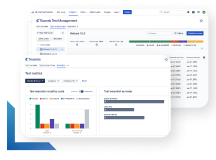
Learn how to supercharge your quality engineering journey with our advanced testing solutions.
Learn how to supercharge your quality engineering journey with our advanced testing solutions.