

eBooks & Guides
5 best practices for end-to-end mobile testing success
In this guide, we take a closer look at some of the common problems...
Localization testing is a type of software testing that checks if an application behaves as expected in a specific locale or region.

Olandria and her team had just finished building a sleek new feature, and it was ready to roll out to users globally. It worked flawlessly in their local environments and passed quality assurance (QA) without issues. However, during a review session with the product team, a critical question came up: “Have we tested it for localization?”While this feature works great in their region, it might break for users in another region—or worse, confuse or even alienate them. However, localization, like most things in software development, isn’t always straightforward and sounds easier said than done.Testing localized versions of software is challenging because it extends beyond simple translations. You need to understand the context, culture, and usability across a wide range of environments. So, where do you start? How do you effectively test for localization?This post will break it down for you, whether you’re an engineer, QA specialist, or product manager looking to get localization right and integrate it into your application’s global release strategy.
Localization testing is a type of software testing that checks if an application behaves as expected in a specific locale or region.
This is achieved by evaluating the correctness, layout, functionality, cultural appropriateness, imagery, local compliance, text, date formats, font, and currency formatting of the product to determine if it’s suitable for a specific language, country, or region.
This is particularly important for globally used products, as poor localization can lead to confusion, broken interfaces, and a loss of trust or sense of disconnect from users.
From an engineering and QA standpoint, however, localization testing ensures that the product is not only technically functional but also native and contextually usable across different locales.
The goal of localization, or l10n as it’s often called, is to make the product feel native to each target audience
While localization, globalization, and internationalization are related, each has a distinct meaning. The goal of localization, or l10n as it’s often called, is to make the product feel native to each target audience. It follows internationalization, focusing on translating and tailoring content, visuals, and behavior to ensure cultural and regional relevance.
Internationalization (i18n) is the design and development process. It ensures that the product is flexible enough to support different audiences and locales. Thus, it’s done early in the development cycle.
Globalization (g11n), on the other hand, ensures that the product can be launched in any global market. You can thus define globalization as the strategy and process of designing, developing, and delivering products that feel native across various locales.
| Localization | Internationalization | Globalization | |
| What is it? | Adapting the product for a specific language, culture, or region | Preparing the codebase and architecture to support multiple audiences and locales | Process of making a product ready for the global market |
| Focus | Translation, formatting, and cultural adaptation | Design and engineering flexibility | Strategy and coordination |
| When should it happen | After internationalization | During product design and development | Across the full product life cycle |
| Example | Translating text to French and formatting dates correctly for France | Externalizing UI strings, using Unicode, and avoiding locale-specific hardcoding | Launching a product in multiple countries with region-specific marketing, compliance, and support strategies |
As the GILT (Globalization, Internationalization, Localization, and Translation) framework, which software development professionals use, puts it, “Globalization = Internationalization + N × Localization”.
The global success of your localization efforts depends on your flexible internationalization base, adapted through localization efforts.
Localization testing is one of several types of software testing. However, while it shares some similarities with other types of testing, such as functional and UI testing, it’s also important in its own right for a distinct purpose.
Let’s explore some differences between localization testing and some other types of testing:
| Primary Focus | How It Differs from Localization Testing | |
| Functional Testing | Checks that the app’s features and functions work as intended. | Functional testing answers, “Does it work?” Localization testing asks, “Does it work correctly here?” |
| UI Performance Testing | Ensures a responsive and smooth UI under various conditions. | Focuses on speed and responsiveness; localization testing focuses on UI accuracy and layout across locales. |
| Accessibility Testing | Ensures compliance with accessibility standards (WCAG). | Localization testing is primarily concerned with ensuring that content works culturally and regionally, rather than specifically for assistive technologies. |
| Exploratory Testing | Finds unexpected bugs or usability issues outside predefined test cases. | Complements localization testing, but localization testing is structured around locale‑specific criteria. |
| Visual Testing | Maintains visual consistency and layout integrity. | Localization testing checks visuals in localized contexts. |
| Performance Testing | Identifies bottlenecks and ensures performance under stress. | Focus is on backend/system performance, while localization testing is user‑facing and content‑focused. |
Localization testing typically focuses on four core areas:
Ensures translations are accurate, grammatical, and contextually appropriate. This includes your terminology, tone, placeholder substitution, and font rendering.
Checks that images used, emojis, color choices, and layout direction align with local expectations and sensitivities.
Ensures that your formats for data and time, currencies, number systems, measurement units, phone formats, and time zones align with local expectations.
Before rolling out, the product must meet local data privacy, tax, content, and product restrictions.
Although much of localization is translation, there are other considerations, such as the fact that our global users have grown up with certain customs, and a certain world view
So, what is a typical localization testing process like?
Well, it often starts with analysis and planning. You need to define the regions and languages to test, as well as identify what requires localization (UI, documentation, and/or support tools). Then, you must establish success criteria or metrics before identifying the cultural or legal constraints that may impact the project.
After this, you should begin your translation. You should utilize translation memory tools or services to ensure consistency and accuracy.
Next, set up your testing environment by configuring regional environments with the appropriate locale settings, including language packs, time zones, currency, and date formats.
You also need to check for missing translations, validate the UI layout, and test for functional correctness and legal disclaimers. Another approach you can take is to use automated testing for this purpose.
Therefore, explore tools to validate the presence of translations, string substitutions, and UI layout issues across builds.
The last step is to review with local experts for tone and fix any bugs with your developers. Next, approve changes and merge everything back into the codebase. After a final review, the localized product can be deployed to your target markets.
You can get a feel for this process by exploring this comprehensive article by the Slack team on how they localize Slack. In this piece, you will see that Slack approaches it holistically. The team goes beyond just translation and ensures they think of cultural fit and emotional resonance.
Like the Slack Localization Team says, and I quote, “Although much of localization is translation, there are other considerations, such as the fact that our global users have grown up with certain customs, and a certain world view. The witty remarks we make, the anecdotes we employ, the references to a familiar idiom…these are the kinds of things we are extra thoughtful about to build trust with our global users.”
Localization testing involves various tasks, including translating texts and regional formatting, as well as ensuring cultural accuracy. These new tasks add a new timeline to your delivery release if it wasn’t initially factored into the development and delivery plan.
To ensure your system is culturally accurate, you might need input from native speakers or cultural experts. This introduces a new level of complexity and increases your project’s dependency on external resources.
Localization testing isn’t a one-off, as new product updates or feature releases may require re-localization.
Start by defining your objectives, target regions, cultural requirements, formatting, and languages. You also need to decide whether you want to perform your localization testing manually, automatically, or with a hybrid approach, and establish a release timeline.
So, what is the objective of the testing? What would you like to gain from it? What does success look like for your team? Which tools would you like to make use of to perform the test?
A key metric to define the success of your localization is tracking your localization defect density, also known as your localization bug ratio. This metric tracks the percentage of bugs related to your localization by measuring the proportion of total reported defects or complaints that are related to localization.
Rather than trying to localize randomly, focus your efforts on regions with high user volumes or of strategic importance to your business. You can use data to make this decision.
Localization should be part of your software development and testing life cycle from day one. This will make the process more efficient and less costly.
Manual testing can be time-consuming and prone to errors, especially when validating multiple languages and regions. So, automate to save time and ensure consistency across releases.
Making your application feel native to users translates to smoother navigation, clearer communication, and greater overall user satisfaction. For example, adapting the date format to users of a specific region ensures they can use your product without any friction.
Localization testing enables you to expand into new markets and access a broader, new customer base.
Localization testing reduces legal risks and ensures market readiness. For example, a health tech application will need to present side effects or advertise differently in countries where drug ads are restricted.
Localization testing ensures content, symbols, and formats align with local norms to prevent confusion.
A perfectly localized product stands out in international markets by offering a more relevant, polished experience than competitors who only provide a generic version.
Localization testing isn’t just a checkbox; it’s a strategic investment in usability, market growth, and global relevance
Localization testing isn’t just a checkbox; it’s a strategic investment in usability, market growth, and global relevance. Thus, it should be a core goal of everyone who wants to build software, systems, and applications that resonate with a global audience and meet regional expectations, regulatory requirements, and user preferences.
Like Nelson Mandela famously said, “If you talk to a man in a language he understands, that goes to his head. If you talk to him in his language, that goes to his heart.”
To make your localization testing thoughtful, efficient and scalable, you need to have a solid localization strategy and utilize smart test automation tools. Solutions like Tricentis help you streamline test management and scale localization efforts with speed, consistency, and precision in every release.
This post was written by Ifeanyi Benedict Iheagwara. Ifeanyi is a data analyst and Power Platform developer who is passionate about technical writing, contributing to open-source organizations, and building communities. Ifeanyi writes about machine learning, data science, and DevOps, and enjoys contributing to open-source projects and the global ecosystem in any capacity.
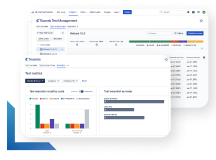
Learn how to supercharge your quality engineering journey with our advanced testing solutions.
Learn how to supercharge your quality engineering journey with our advanced testing solutions.