

Deutsche Börse Group trades manual SAP testing process to gain speed and precision
With a strategic approach to test data, plus the power of Tricentis,...
The goal of retesting is to verify that previously identified broken code is fixed. Keep reading to learn more.

To deliver optimal user experiences, developers must ensure that the features they deliver work as promised. Otherwise, post-deployment, they’ll be woken up by a barrage of notifications from very unhappy customers and colleagues.
In the software development lifecycle, finding bugs early pays a strong dividend. After all, a bug caught before moving to production costs just a fraction of what it otherwise would if encountered in production. When bugs make their way into production environments, the risk of wreaking havoc increases exponentially.
This is why strong software testing procedures are critical.
In a recent piece on Forbes, Tricentis CEO Kevin Thompson outlines the true costs of poor software quality — and how teams can leverage AI tools to minimize errors.
“As organizations accelerate innovation, many are learning that fast delivery without software quality is a recipe for risk,” he writes.
Keep reading to learn more about what retesting is and why it’s so important in the software development lifecycle.
The goal of retesting is to verify that previously identified broken code is fixed.
The goal of retesting is to verify that previously identified broken code is fixed. It involves re-executing certain tests that had failed during the testing cycle.
Retesting is done only after relevant defects have been fixed. For example, let’s say you’ve built an interactive button on your website. During the first build and test cycle, the button doesn’t work properly and stays static. In this case, once you resolve the issue, you’ll retest it to ensure the button works as expected.
Retesting as a practice evolved over time as code bases became increasingly complex and interdependent. Upon encountering a bug, simply fixing the code became insufficient. Developers and testers had to adopt the flow: testing → bug found → fix → retest. The process matured and is now a common part of software QA workflows.
Imagine your car broke down. You take it to a mechanic who fixes it for you. After leaving the shop, you probably wouldn’t take the car for a long drive. That’s a bad idea.
Instead, you’d take the car for a short drive around the block to verify that it’s running smoothly. Similarly, you can’t just fix a software bug and then assume that all’s well. You need to verify the fix works as intended.
With that in mind, here are some key reasons why retesting matters:
Retesting generally should be performed each time developers fix a reported bug or outage in your software. Here are some key scenarios where retesting is a must:
At first glance, retesting and regression testing seem similar. However, the truth is that both complement each other. Let me explain.
The primary purpose of retesting is to ensure that a specific bug was fixed or not. Regression testing, on the other hand, is done to check whether new changes introduced broke any existing functionality.
The scope for retesting is narrow; only failed test cases are subject to retesting. Regression testing is meant to be much broader in scope.
Retesting is done after a defect is fixed. However, regression tests are done every time a new feature or release ships so teams can check for and fix any unintended side effects.
Imagine you’re working on a game called “Rugged Racers.” During gameplay, one of the players reports that the car actually slows down when they hit the accelerator button. That’s clearly a big problem.
You fix the bug, package the game, download it, and check to see if it works by pressing the accelerator button. This time, the car zooms forward. Problem solved!
That process is retesting. You’re checking if the specific bug reported to you was fixed or not.
Now that acceleration is working, you want to ensure that the other parts of the game still work, too. Even though you didn’t touch anything else, chances are that something else got broken accidentally while you made the fix. So you start checking all the other features. Does braking work properly? What about the sound and animations?
This is called regression testing. Simply put, you’re making sure the new fix didn’t mess anything else that was working fine before.
To sum up, the testing flow typically involves:
You get peace of mind that the bug you were hunting down is now actually gone.
Retesting is widely popular as it brings a host of benefits:
Like anything else, retesting comes with its own set of challenges for developers and QA teams. Let’s briefly touch on some of them:
Running the same failed test again and again isn’t exactly glamorous. Retesting can be a not-so-fun activity. Developers enjoy working on complex and creative tasks that include problem-solving, but usually aren’t keen on retesting something they’ve already built.
When deadlines are tight and there’s little room given by management, developers can feel pressured to skip retesting or at least shorten it. This is quite risky as it increases the chances of introducing bugs to the product. Leadership needs to understand why retesting is important and why quality time should be allotted to it.
Just because your test now passes doesn’t guarantee that no other bugs exist in your products. That’s why it’s super important to follow up retesting with regression testing.
When working in a multi-stage environment (DEV, QA, UAT, PROD), reproducing the bug can be a challenge. Sometimes the culprit isn’t the code but rather the environment itself.
Retesting is a simple idea, but it’s the bedrock of modern software QA.
Retesting is a simple idea, but it’s the bedrock of modern software QA. Skipping it isn’t just risky — it’s irresponsible.
The world increasingly requires flawless, smooth-functioning code to run. Unfortunately, even simple bugs can lead to catastrophic consequences.
Recently, we witnessed AWS’ global outage, which brought down apps like Snapchat, Roblox, Signal, and Fortnite with it. The cost? Reportedly, hundreds of billions of dollars.
You might not operate on the same scale as AWS, but you can’t expose your organization to those potential kinds of costs.
To learn more about software testing and how Tricentis helps software developers and QA teams deliver reliable software that powers the world, check out our learning page.
This post was written by Ali Mannan Tirmizi. Ali is a Senior DevOps manager and specializes in SaaS copywriting. He holds a degree in electrical engineering and physics and has held several leadership positions in the Manufacturing IT, DevOps, and social impact domains.
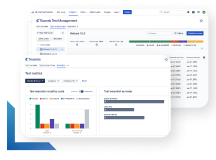
Learn how to supercharge your quality engineering journey with our advanced testing solutions.
Learn how to supercharge your quality engineering journey with our advanced testing solutions.