

Webinars
Best practices for AI/ML models on Databricks: Ensure data integrity first
Ensure trustworthy data to ensure the success of AI/ML models built on...
Learn what validation testing is, key techniques, examples, best practices, and how agentic AI improves validation workflows for QA teams.

Software development often feels like building a bridge while the landscape changes. You might follow blueprints perfectly, but if the bridge lands in the wrong place, it serves no purpose.
This gap between technical perfection and user satisfaction is where validation testing lives. It ensures the software we build actually solves the problems users care about.
While many developers focus on making code run, quality leaders focus on making code and the features it builds meaningful.
TL;DR: Validation testing determines if the software fits the market.
Before diving into the technical details, we need a clear starting point. Validation is the process of confirming that a software product meets the user’s actual needs and fulfills its intended purpose.
It’s the difference between building a gadget that turns on and building one that people actually find useful. Validation replaces assumptions with evidence.
Validation testing typically happens at the end of the development life cycle. You need functional code to perform it.
It involves dynamic testing techniques where the software actually runs. Testers use it to answer one critical question: “Are we building the right product for the market?” If the answer is no, it doesn’t matter how fast or bug-free the software is.
Validation saves effort by catching subtle pain points early.
Now, you might be asking, why spend so much time on validation? And the answer is that without it, companies risk wasting millions on features no one requested.
Validation saves effort by catching subtle pain points early. It ensures the product evolves alongside user needs over time. When you validate ideas, you remove the guesswork. You see how users react, what they choose, and how they provide feedback.
To understand validation, you must know the language of quality. Here are the most important terms:
TL;DR: Verification checks if the software is built correctly, while validation confirms it solves the right problem for users.
One common mistake is confusing verification with validation. While both aim for quality, they have different goals.
Barry Boehm, a famous computer scientist, explained the simplest way to remember the difference: “Requirements validation: ‘Am I building the right product?’ Requirements verification: ‘Am I building the product right?’”
Verification is about the process. It’s an ongoing activity that starts before you write code. It involves examining specifications, architecture, and design. Testers use static techniques like reviews and inspections.
Validation is about the outcome. It assesses whether the final product meets the client’s real expectations. Validation happens after verification is complete. It requires the software to run so you can observe it in action.
| Feature | Impact | How to Address It |
| Primary Goal | Check compliance with specs. | Check alignment with user needs. |
| Primary Question | Are we building it right? | Are we building the right thing? |
| Method | Static (reviews, inspections). | Dynamic (functional, UAT). |
| Timing | Early and continuous. | Late and terminal. |
Regardless, both are essential and necessary. Remember, software testing is incomplete until it undergoes both verification and validation.
TL;DR: Common validation testing types include user acceptance testing, alpha and beta testing, and system or integration validation.
Validation testing comes in many forms. Depending on the stage of the project, you might use different types to confirm quality.
UAT is often the final hurdle before a product goes live. User acceptance is the final process where end-users test the software to ensure it handles real-world business scenarios.
Within UAT, there are two specialized categories:
Before users see the software, the team must validate it internally. Integration testing validates that different components work together correctly. System testing evaluates the end-to-end specifications of the integrated product.
Most validation uses “black box” techniques because users focus on results, not code.
TL;DR: Techniques like equivalence partitioning and boundary value analysis help testers efficiently validate software behavior.
To perform validation effectively, you need specific strategies. Most validation uses “black box” techniques because users focus on results, not code.
You cannot test every possible input. Equivalence partitioning divides input data into groups expected to behave similarly to reduce the total number of test cases. If one value in a group works, you can assume they all do.
Example: A field accepts passwords between 8 and 12 characters.
Testers only need to pick one value from each group to validate the logic.
Software often breaks at the edges of its limits. Boundary value analysis focuses on the extreme ends of input ranges where errors are most likely to occur. Testers check the minimum and maximum values, plus values just inside and outside those limits.
Because the number of defects at a boundary is often higher than anywhere else in the software, these approaches are considered valid and appropriate.
TL;DR: Successful validation requires early planning, stakeholder involvement, clear documentation, and careful execution.
Getting validation right requires planning. Follow these best practices to prevent common headaches:
While traditional automation follows a rigid script, agentic technology uses autonomous agents to think and act.
TL;DR: Agentic AI enhances validation by autonomously generating tests, adapting to changes, and prioritizing high-risk areas.
We are entering a new era of testing powered by agentic AI. While traditional automation follows a rigid script, agentic technology uses autonomous agents to think and act.
Agentic AI involves autonomous agents that use reasoning and planning to execute complex tasks with minimal human intervention.
In validation testing, agentic AI mimics human-like reasoning to navigate complex systems.
In a nutshell, agentic AI moves testing from a reactive step to a self-optimizing ecosystem.
Tricentis offers a suite of tools designed to support intelligent, validated testing.
TL;DR: Combining validation testing with AI-driven tools helps teams build software that truly meets user expectations.
Validation testing is the backbone of trustworthy software. It transforms testing from a technical chore into a strategic advantage. By focusing on user needs and embracing agentic AI, you can ensure your software always lands in the right place.
Tricentis provides the tools and intelligence you need to accelerate your validation journey.
Ready to stop guessing and start validating? Experience the power of AI-driven validation with Tricentis today. Visit our website to schedule a demo and see how we can help you build the right product every time.
This post was written by Juan Reyes. As an entrepreneur, skilled engineer, and mental health champion, Juan pursues sustainable self-growth, embodying leadership, wit, and passion. With over 15 years of experience in the tech industry, Juan has had the opportunity to work with some of the most prominent players in mobile development, web development, and e-commerce in Japan and the US.
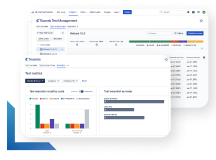
Learn how to supercharge your quality engineering journey with our advanced testing solutions.
Learn how to supercharge your quality engineering journey with our advanced testing solutions.
Verification testing involves examining software specifications, architecture, and design to see if the product is being built correctly, whereas validation testing assesses whether the final product meets the client’s expectations.
Types of validation testing include user acceptance testing (UAT), made up of alpha testing and beta testing, and system and integration testing, which evaluate how the components of the software work together and in the end-to-end system.
Validation testing techniques include strategies such as equivalence partitioning (EP) and boundary value analysis (BVA), which both narrow down the scope of testing inputs to a reasonable set for testers to work with.