

Reports & White Papers
How AI puts the fun back in software testing
Learn how this new approach to test automation relieves you from all...
If you want to deliver software with a minimal defect rate, it’s crucial to learn about software defects. Let’s learn more in this post.

To win a battle, you must first understand your enemy intimately. If you want to deliver software with a minimal defect rate, it’s crucial to learn about software defects.
What is the nature of software defects? How are they born? What are the patterns in which they spread throughout a codebase? These are the types of questions we’ll cover in this post.
In an informal way, we can say that a defect is anything wrong with the application that prevents it from behaving in the expected way. In this sense, people often use “defects” and “bugs” interchangeably.
Put simply, your application has a defect if it has a problem that harms its ability to meet its requirements.
Software defect is a broad term; under its umbrella, there is an incredible variety of types of defects.
We’ll cover these categorizations in a minute; for now, let’s see some examples of software defects:
When it comes to problems in a software application, you might find a variety of terms that people use interchangeably: errors, bugs, defects, failures, and more
When it comes to problems in a software application, you might find a variety of terms that people use interchangeably: errors, bugs, defects, failures, and more. Colloquially, there’s probably no harm in that. But it’s important to acknowledge that there are formal definitions for vocabulary words related to software problems, and as a software professional, you’d benefit from knowing them.
Let’s refer to the IEEE Standard Classification for Software Anomalies to learn the formal definitions of defect, error, failure, and fault:
So, based on the definitions above, let’s create a timeline for an example scenario.
Let’s say a programmer is writing code that makes a request to an endpoint, receives a JSON payload, deserializes that into an object, and tries to access a property of the object. However, that property can be null at times, and the programmer forgot to add a null check to access the property safely. That is an error.
The code is wrong, and the presence of wrong code in the application is a fault. When the changes are deployed to production and the new code is exercised thanks to user interaction, the application crashes when it reaches the faulty code. That prevents the program from performing its expected functions; in other words, a failure has occurred.
And what about the defect? As you’ve seen, that’s a broader term that means an imperfection in any kind of product. So, we can say that software faults are a subtype of defects. But for the purposes of this post, we’ll treat “software defects” and “software faults” as similar.
Since “software defect” is such a broad term, there are many ways in which we can categorize them.
Categorizing by severity, defects can be:
When it comes to whether a given defect affects functionality, there are two broader categories:
Software defects have many causes. They are complex and multifaceted and show up at different times during the software development life cycle.
During the initial phases of a project, when discovery is being done, the seeds for future software defects are often planted
During the initial phases of a project, when discovery is being done, the seeds for future software defects are often planted. Many are the causes, but they can all be traced down to a single root: miscommunication.
Miscommunication can occur because the customers and the technical team don’t share a unified vocabulary, leading to misunderstandings. Miscommunication also occurs when both sides make assumptions about what the other side knows and wants, without asserting those assumptions out loud.
Finally, misuse of communication platforms can also lead to misunderstanding, such as people not using the proper channels of communication or services to share documents, resulting in different teams and stakeholders having different, often outdated versions of the same documents.
There are also plenty of opportunities for the introduction of defects once development starts. Miscommunication often plays a major role in this, particularly regarding requirements being communicated poorly to developers.
Inadequate planning also leads to defects. A lack of refinement sessions, or refinement done poorly, results in developers writing code that doesn’t handle edge cases, might not scale adequately, or doesn’t handle user devices in the expected way.
Of course, many defects happen thanks to the simple fact that programming is hard and developers are fallible human beings. Often, though, these errors end up resulting in defects because the team lacks mechanisms to prevent those errors from being deployed.
So, a non-exhaustive list of causes for programmer errors might include:
Up to this point, we’ve covered what software defects are, their types, and their causes. But how should a software organization go about tracking defects?
It has long been accepted that defects are cheaper to fix the sooner they are discovered.
I’ve previously presented a rough rule of thumb that early upstream defects generally cost 10-100 times as much to remove late downstream as they do to remove close to the point where they are created.
– Steve McConnell, An Ounce of Prevention
Economically, it makes a lot of sense for organizations to try to detect defects as early as possible in the development cycle. The greatest tool for that is having a comprehensive suite of automated testing, including at least unit tests, but also other types of testing as the organization sees fit.
Other valuable tactics include:
Once defects are discovered, they have to be triaged and fixed accordingly. You should have all defects tracked through tickets on your issue management system, with clear reproduction steps, as well as evidence of the defect and any other information that can help the programmer working to fix it.
Ideally, you should fix defects before working on new functionality. Pragmatically, not all defects are the same when it comes to their severity; often, it makes sense to ship with known bugs that are low or medium severity if that means not holding back shipping valuable new features.
It’s also recommended to collect data related to defects, so you can calculate and hopefully improve metrics such as MTTR (mean time to repair) and MTBF (mean time between failures).
In a nutshell:
Producing defect-free software is an impossible dream; delivering software with a minimal number of defects is a more feasible goal
Producing defect-free software is an impossible dream; delivering software with a minimal number of defects is a more feasible goal. However, achieving that goal requires understanding the nature and cause of software defects.
In this post, we’ve covered that and more. You now understand what software defects are and how they’re categorized. You also know their main causes and how to track and manage them effectively.
This post was written by Carlos Schults. Carlos is a skilled software engineer and an accomplished technical writer for various clients. His passion is to get to the bottom (the original source) of things and captivate readers with approachable and informative technical content.
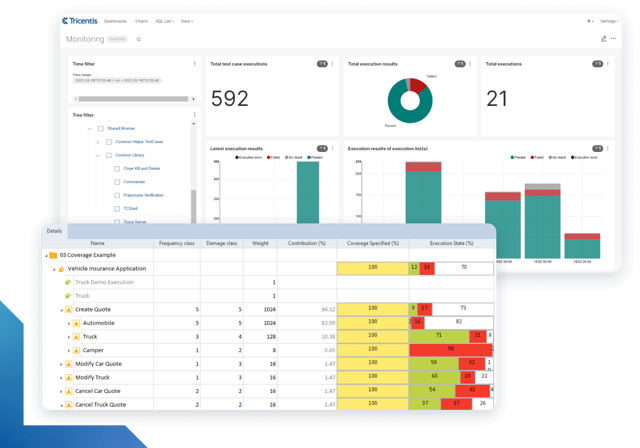
Learn more about intelligent test automation and how an AI-powered testing tool can optimize enterprise testing.
Learn more about intelligent test automation and how an AI-powered testing tool can optimize enterprise testing.