

Webinars
How to avoid the hazards that can wreck your analytical and operational data with Tricentis Data Integrity
Join us to learn about a new approach to reducing the costly data...
Analytics testing verifies that your product tracks the right events with the right values. Let’s learn more in this post.

In the high-stakes world of business, it’s critical to have an eye on what’s happening behind the scenes. You ship features. Users click, swipe, and sometimes bounce. If you have an analytics platform in place (and you should), your dashboard glows like city lights at night. But how do you know those lights are telling the truth? Analytics testing makes sure your numbers reflect reality, not wishful thinking. Think of it like calibrating a compass before hiking. You can wander without it, but you’ll likely end up lost.
In this post, we’ll explore what analytics testing is, why it matters, and how to do it well.
Let’s start with the basics.
Analytics testing verifies that your product tracks the right events with the right values. It confirms that data flows correctly from user actions to dashboards and that this data is collected with integrity and is processed correctly. If analytics are wrong, decisions wobble. If analytics are solid, decisions become crisp and confident.
Leaders rely on your numbers. Budgets hinge on conversion curves. Experiments determine roadmaps. When analytics drift, your team flies blind. Experiments need accurate telemetry. Otherwise, you’re just guessing with style.
Functional tests verify behavior. Analytics tests verify truth in data. They span layers: UI, data layer, tag manager, network calls, and the analytics platform. You validate names, parameters, identities, and timing. You also check the final reports for sanity.
There are a handful of analytics testing types you can leverage on your systems. These include:
In data validation, the effort is focused on validating the integrity, accuracy, and shape or format of the data
In data validation, the effort is focused on validating the integrity, accuracy, and shape or format of the data. It involves verifying that the data captured and stored is accurate, complete, and consistent across sources and stages of the pipeline.
Additionally, the data must adhere to the expected format and data types within the database it targets or the analytics platform of the destination.
Event tracking involves validation that specific user interactions or events are accurately tracked and sent to the system. Furthermore, this testing requires the confirmation of consistent tracking across clients and operating systems.
Report and dashboard testing covers the accuracy, functionality, and visualization of the data collected so that it can be used for decision-making. For this, we must verify that the data reflects the raw sources correctly and that we can manipulate it with the tools in the dashboard. Finally, the visualizations must display the reality of the data over time.
Our systems are likely to be integrated with third-party solutions and systems. This must also be tested. Integration testing demands the validation of the functionality and robustness of these integrations.
To ensure the performance of our dashboards, it’s crucial to perform tests like load tests and scalability tests to assess the capacity of the platform to handle stress and unexpected increases in data flows.
Finally, and most importantly, reassurance on the security of our data is essential to the well-being of our business. To achieve this, data privacy and access control testing are the best tools to have the peace of mind that sensitive user data is handled and stored in compliance with regulations and that only authorized users can access and view it.
There are four concepts that are key for analytics testing: tracking plan, data layer, events and parameters, and experiment integrity.
A tracking plan lists events, parameters, and owners. In it, you define naming rules, types, and privacy flags to keep tabs on your testing. Make sure to keep it versioned and treat it like code.
A data layer centralizes values. A clean data layer makes testing easier and tagging safer if you are using Google Analytics or similar platforms.
Events represent actions, and parameters add context. Any action or interaction the system handles is an event. Make sure to use a schema and lint it.
To evaluate integrity effectively, check sample splits, exposure, and guardrails. Watch for sample ratio mismatch (SRM), which is a significant difference between expected and actual group sizes. An SRM usually means a bug in assignment or tracking.
List high-stakes events first, and tie each event to a decision or KPI
Here are the basics of an analytics testing framework you can use as a template for your operation.
First, define the “what” and “why” of your testing. List high-stakes events first, and tie each event to a decision or KPI. It helps to document required parameters and types.
Make sure to instrument your testing with a data layer and tag SDK. The key is to emit clean data objects and map them to events in your tag manager or SDK. Don’t forget to include privacy flags and consent checks to be safe.
Next, add tests at every level: unit tests, integration tests, and report checks. Assert that event builders format payloads properly and network calls are captured and parameters validated. Finally, validate the metrics reported.
After the tests are integrated, automate the CI. Run unit and integration tests on each merge and fail builds for critical events that break. You can also publish a test report artifact.
Finally, monitor your output in production. Track event volume and error rates. Additionally, ensure that alerts are delivered on sudden drops or parameter nulls.
“If it hurts, do it more often, and bring the pain forward.” — Jez Humble & David Farley, Continuous Delivery
Following best practices is one of the most straightforward ways to guarantee a successful operation. In the world of testing, this is no different. Here are the most important best practices to follow in analytics testing.
Start with a concise tracking plan. Keep it versioned with your code and tie events to explicit decisions.
Expose structured values once. Let tags and SDKs consume them. Both Google and Adobe endorse this approach.
Adopt naming rules. Reuse recommended schemas when possible. GA4’s event guidance helps here.
Unit tests for builders. Integration tests for network calls. Report checks for end-to-end truths.
Break the build for broken critical events. Treat telemetry like business logic.
Check group sizes, exposure, and tracking equality. Halt when SRM appears.
Use tools like DebugView and real-time reports right after deployment. Create alerts for event volume drops.
Gate tracking behind consent status. Avoid sending personal data. Document retention policies.
Great analytics starts with great instrumentation
Great analytics starts with great instrumentation. Analytics testing gives you confidence in every chart and experiment. After this, your dashboards will become more than just pretty pictures. They will be a map of truth that will move your team faster and help you ship with confidence.
This post was written by Juan Reyes. As an entrepreneur, skilled engineer, and mental health champion, Juan pursues sustainable self-growth, embodying leadership, wit, and passion. With over 15 years of experience in the tech industry, Juan has had the opportunity to work with some of the most prominent players in mobile development, web development, and e-commerce in Japan and the US.
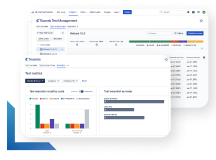
Learn how to supercharge your quality engineering journey with our advanced testing solutions.
Learn how to supercharge your quality engineering journey with our advanced testing solutions.